
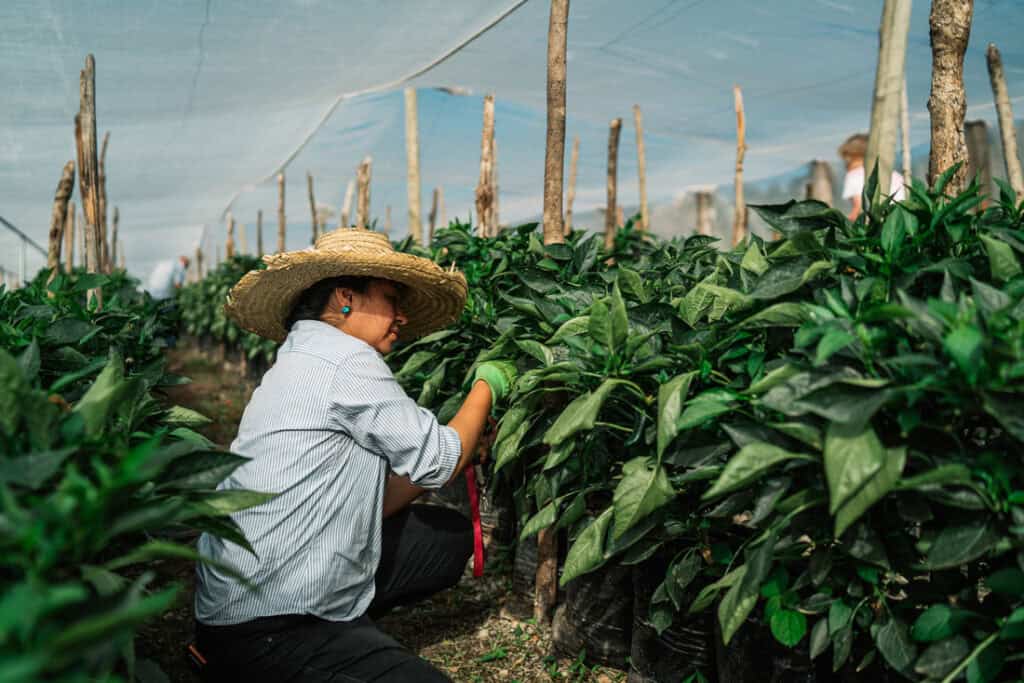
Sustainable agriculture refers to farming practices that meet today’s food and fiber needs without compromising the ability of future generations to meet theirs. It focuses on producing food in ways that protect the environment, support farmers, and strengthen communities.
At its core, sustainable agriculture is about balance. It integrates environmental health, economic viability, and social equity to create long-term, resilient food systems.
When implemented effectively, it uses natural resources responsibly, improves soil health, minimizes pollution, and supports stable livelihoods for farmers.
Why Sustainable Agriculture Matters
As the global population grows, so does the demand for food. By 2050, food production will need to increase significantly to meet global needs.
However, conventional or industrial agriculture often relies on heavy chemical inputs and intensive land use, which can degrade soil, pollute water, and reduce biodiversity.
Many of these challenges are tied to deeper issues like the causes of food insecurity and the need for long-term solutions. These issues also highlight how world hunger and the environment are interconnected.
Sustainable agriculture offers a different path—one that:
- Protects natural resources
- Improves resilience to climate change
- Supports long-term food security
- Strengthens rural economies and livelihoods
It is not just a farming method—it is a necessary shift toward a healthier and more equitable global food system.
The Core Goals of Sustainable Agriculture
Sustainable agriculture aims to achieve several interconnected goals:
- Environmental health – Protect soil, water, and biodiversity while reducing pollution
- Economic viability – Ensure farms remain productive and profitable over time
- Social equity – Support fair labor practices and improve farmer livelihoods
- Food security – Provide stable access to nutritious food for communities
Together, these goals help create resilient agricultural systems that can withstand environmental and economic challenges.
Harmful Practices Sustainable Agriculture Seeks to Replace
Sustainable agriculture also focuses on reducing or eliminating harmful farming practices that degrade ecosystems over time.
These include:
- Overgrazing – prevents land from recovering and leads to soil erosion
- Slash-and-burn farming – destroys organic matter and increases pollution
- Excessive pesticide use – contaminates soil and water and harms ecosystems
- Synthetic fertilizer overuse – damages soil structure and creates toxic buildup
- Excessive tillage – increases erosion and disrupts soil biology
- Monocropping – weakens soil and increases vulnerability to pests and disease
Reducing these practices is critical for restoring soil health and ensuring long-term productivity.
Key Sustainable Agriculture Practices
Sustainable agriculture is not one method—it includes a range of proven practices that work with natural systems.
1. Crop Rotation
Planting different crops in sequence helps maintain soil nutrients, reduce pests, and improve overall yields over time.
2. Permaculture
A system that mimics natural ecosystems by integrating plants, trees, and animals to reduce waste and increase efficiency.
3. Reduced or No Tillage
Minimizing soil disturbance preserves soil structure, improves water retention, and supports beneficial microorganisms.
4. Integrated Pest Management (IPM)
Uses a combination of biological, mechanical, and ecological methods to control pests while reducing chemical use.
5. Managed Grazing
Rotating livestock across pastures prevents overgrazing and supports soil regeneration.
6. Agroforestry
Combining trees with crops or livestock improves soil health, reduces erosion, and enhances biodiversity.
These practices help farmers produce food sustainably while protecting the land they depend on.
Many of these approaches overlap with regenerative agriculture, which focuses on restoring soil health and ecosystems. Models like community-supported agriculture also strengthen local economies and connect farmers directly with communities.
How Sustainable Agriculture Supports Climate Resilience
Sustainable agriculture plays a critical role in addressing climate change by:
- Improving soil’s ability to store carbon
- Reducing reliance on fossil-fuel-based inputs
- Increasing resilience to droughts and extreme weather
- Preserving ecosystems that regulate climate
By strengthening natural systems, sustainable agriculture helps both farmers and communities adapt to a changing climate. Learn more about how climate change impacts agriculture and food systems.
How You Can Support Sustainable Agriculture
Sustainable agriculture depends on collective action—from farmers to consumers.
You can help by:
- Supporting organizations that promote sustainable farming
- Choosing food grown through responsible practices
- Advocating for policies that protect farmers and the environment
Together, these efforts contribute to a more just and sustainable global food system.
You can also take action by learning how you can help solve world hunger.
