
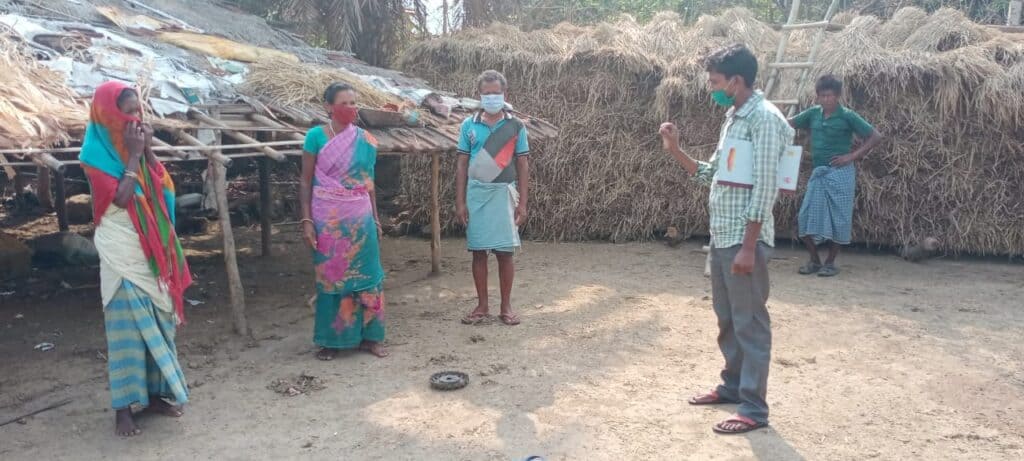
The COVID-19 pandemic may no longer dominate global headlines, but its effects are still felt by families who were pushed to the brink during the crisis. In eastern India, Vijwa and Maisi Pahadia remember that uncertainty all too well—and the relief that came when help arrived at the moment they needed it most.
When the second wave of COVID-19 surged across India in early May 2021, the world watched as hospitals in major cities struggled to cope. The health system buckled under soaring case numbers. Hospital beds were scarce, oxygen supplies ran critically low, and medical staff were overwhelmed. Images of mass cremations and grieving families spread across news outlets and social media.
When Crisis Reaches Rural Communities
Far from the spotlight of major cities, rural regions were facing a quieter but equally dangerous emergency. In Jharkhand, a predominantly rural state in eastern India, COVID-19 cases were rising rapidly—but access to care was far more limited. Official reports on May 4 listed 59,675 cases, yet the true numbers were likely much higher.
In many rural villages, families live day to day on limited incomes. Seeking medical care can mean traveling long distances and losing vital wages. As a result, many people never sought testing or treatment, and countless cases and deaths likely went unreported.
Government-ordered lockdowns aimed to slow the spread of the virus, but for families like the Pahadias, they brought a different kind of danger. Vijwa and Maisi are daily wage laborers, and when work stopped, so did their income. Their small farm could not produce enough food to sustain their family, and school closures meant their five children no longer received regular meals through school programs.
“We were terrified,” Maisi recalled. “We didn’t know how we would feed our children.”
Local Partnerships, Lifesaving Support
Through generous global support, World Renew partnered with trusted local organizations to respond quickly and effectively. In Jharkhand, World Renew worked with EFICOR to support families across 123 rural villages in the Malto and Santhal districts.
Together, they distributed hygiene kits to 5,495 families and shared accurate health information in communities where misinformation about COVID-19 and vaccines was widespread. Educational materials were shared directly with families, including through WhatsApp, helping communities better protect themselves.
EFICOR also supported the administration of COVID-19 vaccinations for 600 people and facilitated cash transfers for vulnerable households. These transfers were made available through local village kiosks, eliminating the need for long-distance travel to banks. To date, hundreds of families—including the Pahadias—have been able to buy food and medical supplies because of this support.
“I am very thankful to [World Renew and] EFICOR for this support,” Maisi said. “We were able to buy necessities for our family.”
World Renew also partnered with ADRA to strengthen the health system response in India. According to ADRA executive director Steve Matthews:
“The donation of World Renew has equipped hospitals in India with Oxygen Generation Plants, ventilators, multipara monitors, oxygen concentrators, various other medical equipment, essential PPE materials, and enabled the administration of COVID-19 vaccines. As a direct result of this intervention, we have jointly contributed to the recovery of millions of COVID-19 patients. These hospitals are now equipped to handle current needs and future surges of respiratory illness for years to come.”
Hope That Lasts Beyond the Crisis
For families like the Pahadias, this support meant more than survival—it meant dignity, hope, and the ability to face an uncertain future with greater confidence. Long after emergency headlines fade, the impact of timely, compassionate action continues to shape lives and communities.
