
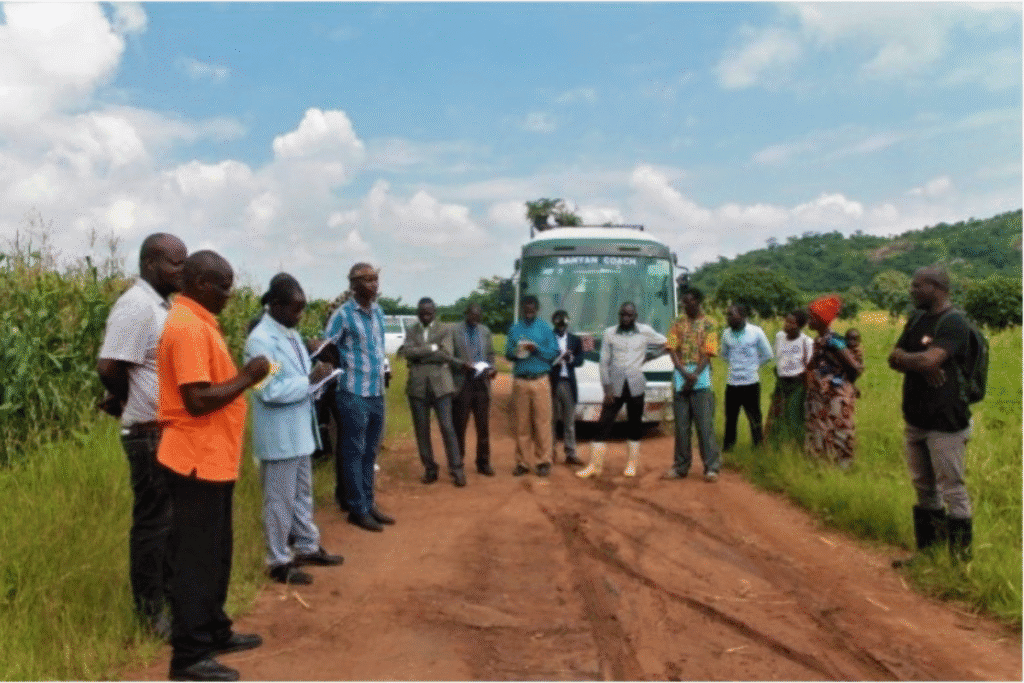
In the northern region of Malawi, the town of Rumphi has faced increasing challenges with flooding in recent years. Most families depend on farming for their livelihoods, and each rainy season now brings uncertainty and stress as crops, homes, and property are at risk of being damaged or destroyed.
Last year, the local hospital was severely affected by flooding. Its entire supply of medicine was washed away, and patients had to be evacuated—highlighting just how disruptive and dangerous these floods have become for the whole community.
The Cycle of Deforestation and Survival
Job opportunities in the region are limited. To make ends meet, many people turn to cutting down trees on nearby hillsides to sell as firewood or to produce charcoal. While this provides short-term income, it has contributed to a growing environmental crisis.
Deforestation has become a key driver of flooding in Rumphi. As trees disappear, the soil on the hillsides is no longer held in place. Erosion increases, and fertile land is washed into the “dimbas” (wetland gardens), causing siltation. Over time, this reduces the productivity of the land, prompting farmers to clear even more forested areas to start again—continuing a difficult cycle.
Learning, Leading, and Acting Together
Recognizing the urgency of the situation, village and religious leaders began working with World Renew and a local partner, Eagles, to explore possible solutions. They understood that the scale of the problem would make it challenging, but they were committed to finding a way forward.
As part of this effort, leaders visited Chongoni in Dedza—an area that had faced similar challenges. There, they learned practical water management techniques, including how to control the flow and speed of runoff, and the importance of protecting and planting trees to stabilize the land.
Inspired by what they saw, the leaders returned home and worked together to develop a plan. They began sharing their knowledge with others in the community and took practical steps, such as building check dams to slow water flow and reduce erosion.
However, progress was not without setbacks. When community members reported illegal tree cutting, no action was taken. It became clear that some individuals responsible for enforcing forestry protection were also involved in the very activities contributing to deforestation.
In response, local leaders broadened the conversation. They brought together stakeholders from across the community—including representatives from agriculture, roads, environmental services, healthcare, law enforcement, and the prison system—to discuss the far-reaching impacts of deforestation.
Together, they are working to build a shared understanding: that lasting change requires collective responsibility. By working side by side, the community is taking meaningful steps towards protecting their environment, reducing flooding, and building a more resilient future.
