
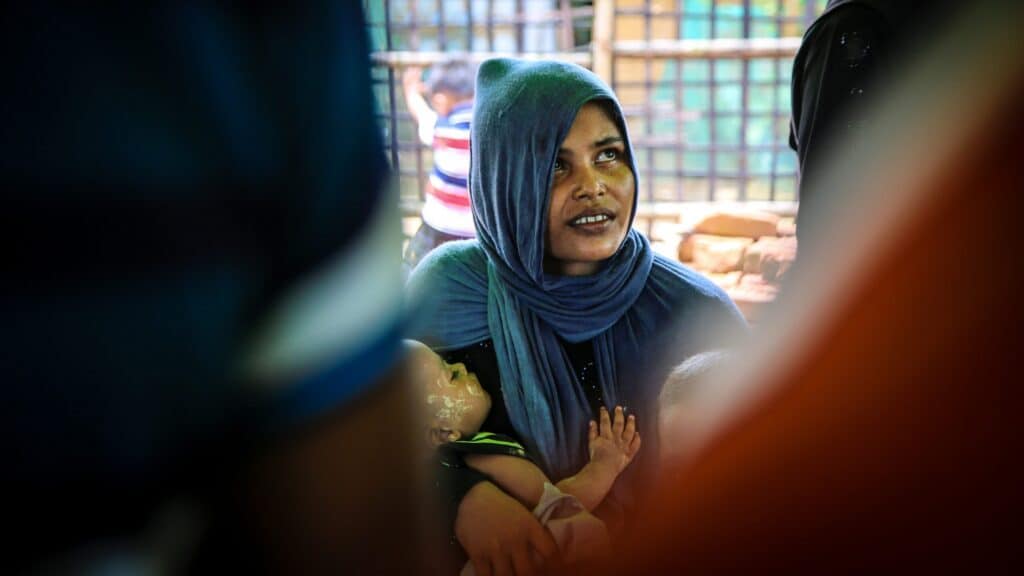
Rashida, 24, lives in Hatirgona village in Teknaf, in the Cox’s Bazar district of Bangladesh, where the influx of Rohingya refugees has put significant strain on the local community.
Hatirgona is home to 1,300 people, many of whom rely on seasonal fishing, agriculture, and day labour to earn a living.
As local residents began competing with Rohingya refugees for jobs—often at lower wages—more families started facing severe hunger, including Rashida’s. Her husband, a small trader and day labourer, found it increasingly difficult to earn enough to support their family.
World Renew, through its local partner SATHI, has been working to improve food security for vulnerable families in Teknaf. For Rashida, the support she received went beyond meeting basic needs—it helped her reimagine her role in her family and community.
Breaking the Cycle of Injustice in Bangladesh
In Rashida’s community, women are often denied basic rights and opportunities. Many are married young and expected to stay at home, limiting their independence and participation in community life.
After her marriage, Rashida spent her days managing household chores and caring for her two children—but she longed for something more.
When SATHI launched a women’s group in her village, Rashida eagerly joined. She became an active member, and her compassion and desire to help others stood out. She was selected to receive training as a Community Health Counsellor.
Through this training, Rashida learned about essential care during the first 1,000 days of a child’s life, including the importance of vaccinations, proper nutrition, and good hygiene practices.
Today, she shares this knowledge with pregnant and breastfeeding mothers in her community. She also organizes follow-up meetings to support new mothers and help ensure they are able to put what they’ve learned into practice.
From Household Caregiver to Community Leader
Rashida also received training in vegetable gardening and poultry rearing. She has applied these skills at home and encourages her neighbours to do the same. These efforts have helped her generate income, strengthen her family’s food security, and take on a more active role in her community.
Through her determination and the opportunities provided through the program, Rashida is breaking the cycle of injustice—both in her own life and for others around her.
