
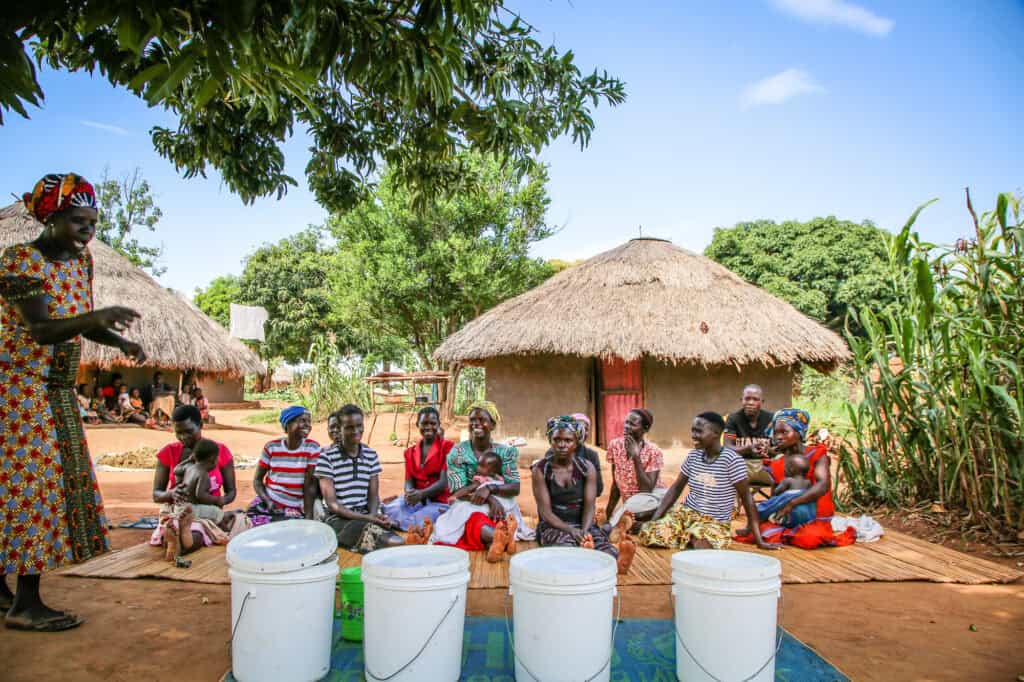
The term sustainable community focuses on creating a healthy environment and economy that will persist for generations. We believe that strong communities are the foundation of a safe and peaceful world.
Some of the biggest challenges we face in creating sustainable communities are climate change, economic inequality, and gender disparity. These issues continue to shape World Renew’s long‑term community development programs around the world.
So what can you do to help develop sustainable communities? In this article, we’ll define what a sustainable community is and explore practical ways you can help build stronger communities—both where you live and globally.
What is a sustainable community?
A sustainable community serves people’s needs while protecting the environment and reducing long‑term damage to natural resources.
It is also a community that promotes responsible use of resources, reduces pollution, improves community health, and seeks to understand and protect the people who live within it.
Through long‑term community development programs, World Renew works toward holistic sustainability. This includes initiatives such as solar‑powered homes, local employment opportunities, sustainable food production, and near zero‑waste management systems. With these best practices in place, communities can build resilience and create lasting change.
To support sustainable community development, several key factors are essential:
- Shifting away from polluting and wasteful practices
- Supporting the environmental and social impacts of development and community operations
- Strengthening the local economy by promoting value‑added goods and services
Ways to be more sustainable
In Matthew 7, Jesus describes a wise person as someone who hears God’s teachings and puts them into practice. How can we apply the principles of sustainable community development in our own lives while also supporting sustainability around the world?
Here are some simple, practical lifestyle adjustments you can make to help your community become more sustainable:
- Conserve water
- Start a compost pile
- Donate unused clothes, shoes, furniture, and other household goods
- Recycle plastics, paper, and other materials
- Reuse, recycle, or responsibly donate electronics
- Reduce the use of non‑recyclable products
While these steps are a good place to begin, long‑term sustainability requires deeper, more systemic practices.
How can you help develop a more sustainable community?
For environmental, social, and economic reasons, sustainability is essential to the long‑term health of communities. While many of these practices can be applied in established communities, they are often most effective when integrated from the earliest stages of development. That’s why World Renew engages these areas holistically in its programs around the world.
1. Conserve energy
Conserving energy and increasing access to renewable sources are key to building sustainable communities. Using solar power, efficient cooling systems, and wind energy can significantly reduce dependence on fossil fuels.
Planning infrastructure with renewable energy in mind from the start can make energy solutions more affordable and sustainable over time.
Meet Sandress, a father in Zambia who installed solar panels on the roof of his home to help his children succeed in school.
Here are some practical yet effective ways to conserve energy at home.
2. Reduce and recycle waste
Waste reduction begins with choosing reusable materials and responsibly managing what we discard. Communities can support these efforts by facilitating recycling, composting organic materials, and using innovative approaches to turn waste into useful resources.
Meet Row Shan, a farmer in Bangladesh whose community safely uses waste to create the fertilizer that helps their crops thrive.
Learn more about what you can do to reduce waste in your own community.
3. Promote local food sources
Supporting local farmers strengthens both the environment and the local economy. Access to fresh, locally produced food contributes to healthier lifestyles while reducing the environmental impact of long‑distance transportation.
Meet Moses, a farmer in Uganda who received training in conservation agriculture through World Renew and now teaches others how to grow more and sell their produce.
Here’s a list of 10 things you can do to promote your local food system.
4. Control pollution
Reducing pollution is an important part of sustainable community development. Communities can adopt policies that reduce traffic congestion and emissions by encouraging public transportation, walking paths, cycling, and renewable energy use.
Meet Stella, a grandmother in Mozambique who relies on her bicycle to sell produce, visit the doctor, and run errands.
While pollution cannot be eliminated entirely, these measures can significantly improve environmental and community health.
5. Support local businesses
Local businesses play a vital role in economic development. When they grow and succeed, they create jobs and help keep resources circulating within the community.
Meet Olga, a small business owner in Honduras who is helping reshape the future of her community in Tegucigalpa.
Here are a few ways small businesses benefit from their local communities.
6. Develop public spaces
Parks, gardens, and shared spaces do more than beautify neighbourhoods. They support local ecosystems, encourage physical activity, and create opportunities for social connection. Community‑led green spaces can foster belonging and shared responsibility.
Here’s a helpful article that explains the importance of a public space for a good community.
7. Educate your community
Education is foundational to sustainable development. By raising awareness about environmental stewardship, economic resilience, and social well‑being, communities can work together to protect natural resources, preserve culture, and build a shared future.
Helping community members and leaders understand the value of sustainability strengthens both local action and long‑term impact.
Explore our opportunities to get involved and engage with your community today.
Let’s create a happier, more sustainable community together
There are many ways to support sustainable community development. The practices shared here are just a starting point.
Living sustainably is not only a choice—it is a responsibility. As children of God, embracing sustainability reflects a commitment to stewardship and care for all creation.
As part of World Renew’s mission to renew hope around the world, we continue working alongside communities to build sustainable economic opportunities and resilient futures. You are invited to join this journey by learning, advocating, and supporting community development initiatives around the world.
