
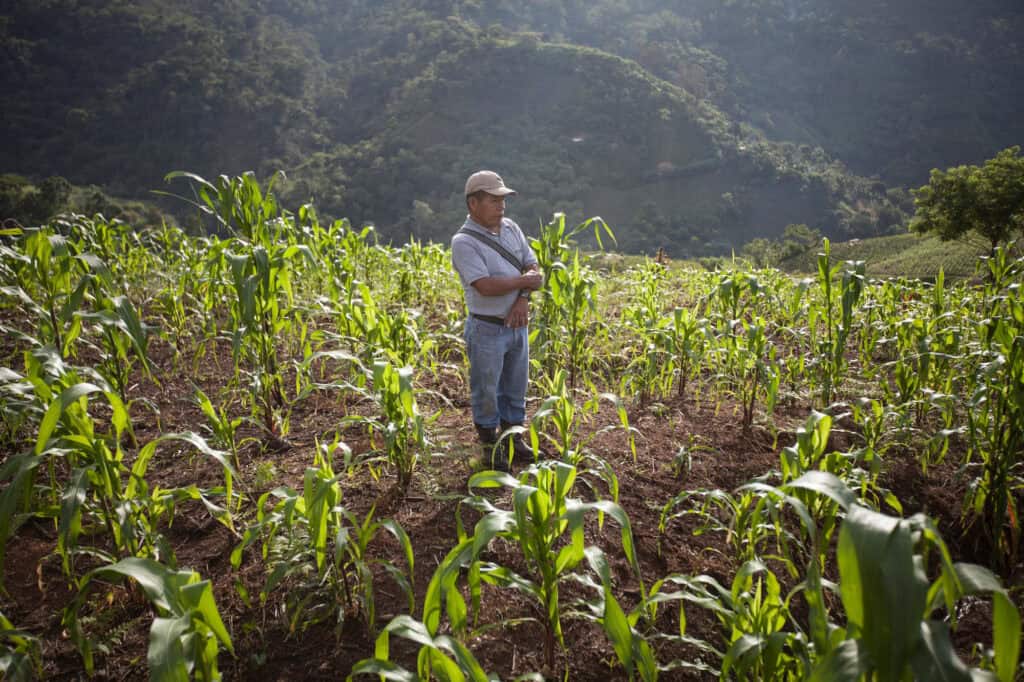
Climate change is one of the biggest challenges facing our world today. Among its many impacts, it poses a growing global threat to food security and to farmers’ livelihoods. As the world’s population continues to grow, agriculture is under increasing pressure to produce enough food—pressure that is further intensified by climate change.
Many smallholder farmers—those working small, family-run farms—are especially vulnerable to these changes due to their reliance on rainfall and limited resources.
Unpredictable weather conditions such as rising temperatures, floods, droughts, and increased exposure to pests and crop diseases cause serious challenges for smallholder farmers around the world.
Because farmers are often the most exposed to the impacts of climate change, working alongside them to build climate resilience is essential for long‑term global food security. In this article, we explore five key ways climate change affects agriculture and how sustainable, climate‑smart approaches can help communities become more food secure in the future.
What impact does climate change have on agriculture?
Climate change is already affecting agriculture and will continue to do so in the years ahead, increasing the risk of food insecurity—especially for vulnerable communities.
Below are five major impacts of climate change on agriculture.
1. Unpredictable rainfall
Too much water can seriously affect food production. As the climate changes, rainfall patterns are shifting across regions, and these changes are expected to intensify. Some areas are experiencing wetter rainy seasons and drier dry seasons—sometimes within the same year.
Heavy rainfall can wipe out entire crops across large areas. Excess water can also lead to soil waterlogging and reduced plant growth, damaging soil structure over time. Floods are devastating for crops and livestock and can accelerate soil erosion, contaminate water sources, and damage roads, bridges, schools, and other community infrastructure.
In Zambia, farmers were frequently losing crops due to both insufficient rainfall and excessive flooding. Through World Renew programs, farmers were trained in improved farming techniques, soil management, and crop diversification. These approaches helped them strengthen their food production and better support their families over the long term.
2. Rising temperatures
Higher temperatures during growing seasons can have a major impact on agricultural productivity, farm income, and food security. As heat increases, farmers and farmworkers face more difficult and unstable working conditions.
Even short‑term temperature increases can reduce crop yields and disrupt plant development—particularly for temperate crops such as wheat. Higher temperatures can also result in decreased sugar content, poor fruit coloration, and lower yield stability, while increasing weeds, blights, and harmful insects that damage crops.
3. Droughts
Too little water can be just as harmful as too much. Severe droughts in many regions have taken a heavy toll on crops and livestock.
Drought reduces both water availability and water quality for farms, rangelands, and grasslands, creating serious economic challenges for agricultural livelihoods. It can also contribute to pest outbreaks, increased wildfires, and disruptions to carbon, nutrient, and water cycles—all of which affect agricultural productivity, ecosystem services, and farmer health.
In the district of Mwandi, recurrent droughts made daily life extremely difficult for many households. With support from World Renew, vulnerable farmers were able to strengthen community assets and increase food production, improving resilience despite ongoing climate pressures.
4. Rising sea levels
Rising sea levels are an unavoidable consequence of a warming climate. They result from higher ocean temperatures and the addition of water from melting glaciers and ice sheets.
As sea levels rise, low‑lying coastal regions are increasingly affected by saltwater intrusion, which can pollute farmland and reduce soil fertility. In Bangladesh, for example, rising sea levels have significantly affected the livelihoods of rice farmers, forcing some to shift to shrimp farming while others have lost their primary source of income altogether.
5. Pests and diseases
Climate change also influences agriculture indirectly by increasing the spread and severity of pests and diseases. Warmer temperatures can accelerate pest digestion and reproduction, making infestations more damaging to crops.
Pests and plant diseases are a major cause of crop loss worldwide, though exact figures are difficult to quantify. One example is the desert locust, which has thrived under warmer and wetter conditions in parts of East Africa.
Plant pests and diseases often occur as complexes, originating from multiple sources. Insects such as aphids and leafhoppers can spread plant diseases, while crops grown in poor or degraded soils are more vulnerable to infection and stress.
Different ways to help address climate change
Addressing climate change requires both mitigation and adaptation. Climate‑smart agriculture integrates sustainable farming approaches with climate responsiveness, helping farmers reduce risk while maintaining productivity.
Below are several key strategies that support farmers in adapting to climate change.
1. Planting more trees
Planting trees can play an important role in strengthening food security. Sustainably managed trees protect soil, capture greenhouse gases, reduce erosion, filter water, and improve overall environmental health.
Trees can enhance agricultural systems, protect surrounding forests and ecosystems, and contribute to healthier, more resilient landscapes. These benefits help both mitigate climate change and support long‑term agricultural productivity.
2. Water conservation
Agriculture uses approximately 70% of the world’s freshwater, making water conservation an urgent priority—particularly in regions already experiencing water scarcity, which is expected to worsen as global temperatures rise.
Water is a vital component of many World Renew programs. We continue working with communities to improve access to safe and reliable water sources that support farming and household needs.
Through partnerships in Niger, for example, communities have promoted small‑scale gardening to improve food availability and nutrition. Even before harvests begin, villages benefit from infrastructure improvements such as newly constructed water wells that provide water for the entire community.
3. Managing soil
Healthy soil is essential for productive and climate‑resilient agriculture. Soil management helps prevent degradation, reduce greenhouse gas emissions, preserve biodiversity, and improve soil structure.
Heavy rainfall can wash away fertile topsoil, especially on sloped land, while ground cover helps protect soil and retain moisture in drought‑prone areas. In flood‑prone regions, drainage systems and contour planting—such as natural terraces and ridges—can reduce erosion and protect nutrient‑rich soil.
Practices that improve soil quality also increase productivity, a key goal of climate‑smart agriculture. Healthy soils are also important carbon sinks, helping reduce carbon dioxide in the atmosphere.
4. Pest and disease management
As pests and diseases increase due to climate change, farmers may feel pressure to rely heavily on pesticides. Over‑application, however, raises costs and increases health and environmental risks.
Climate‑smart agriculture training helps farmers monitor pests and respond with appropriate, timely, and safer management techniques.
In Uganda, communities faced desert locust outbreaks that threatened crops and increased food insecurity. World Renew worked with partners in the Teso and Karamoja regions to strengthen community‑based pest management. Leaders received training on prevention methods, and nearly 3,000 families gained greater awareness and preparedness.
5. Promoting drought‑tolerant crops
In areas with shorter or unreliable rainy seasons, farmers are increasingly adopting drought‑tolerant crops such as sorghum, millet, pigeon peas, cowpea, and green gram. These crops help reduce the risk of total crop failure while supporting crop diversity and household nutrition.
Farmers are trained in good agricultural practices, post‑harvest handling, and value addition, enabling them to improve both food security and income generation.
Adopting climate‑smart agriculture for the future
As the impacts of climate change continue to intensify, farmers and their communities face increasing risks to their livelihoods and food systems. However, by adopting sustainable agricultural practices, they can build more resilient, low‑carbon food systems capable of feeding future generations.
World Renew is committed to supporting communities around the world as they work toward food security. In Bangladesh, small‑scale farmers have been introduced to climate‑smart agriculture approaches that improve productivity, income, and resilience to climate shocks.
In East Africa, World Renew has supported farmers in adopting Conservation Agriculture, which promotes soil regeneration and biodiversity through soil cover, minimal tillage, and crop rotation.
World Renew takes a holistic approach to agriculture and climate resilience—working alongside farmers, local partners, and community leaders to strengthen food systems at household, community, and regional levels.
Together, from small‑scale farms to larger agricultural systems, individuals and communities can take meaningful steps to care for creation and shape a more sustainable future. You can start by giving to support World Renew’s work in food security.
