
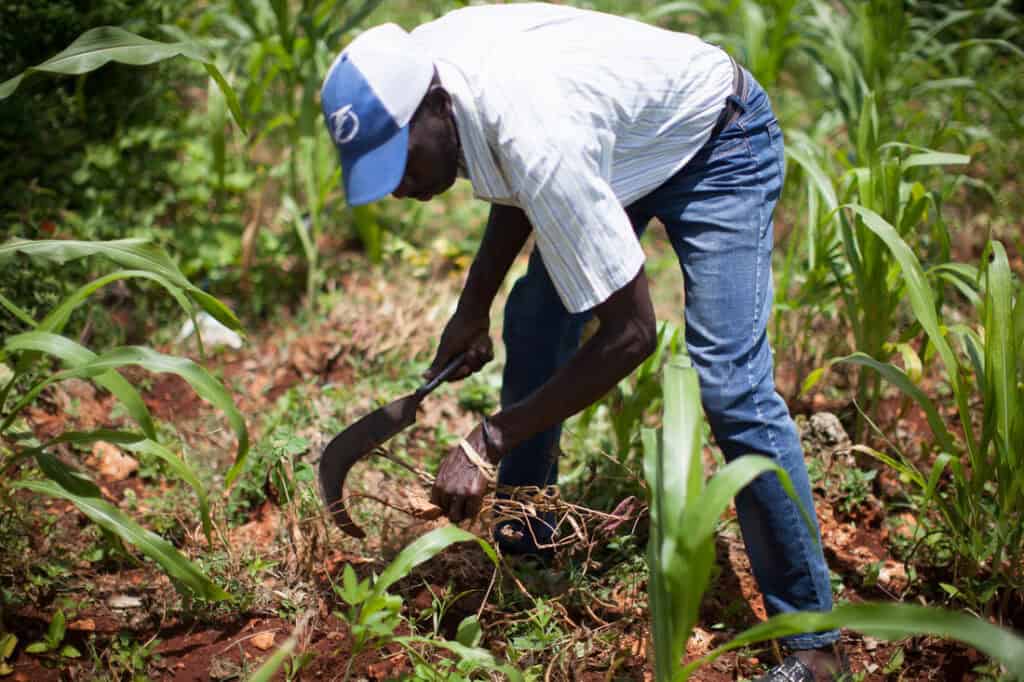
In recent decades, conventional land use and industrial farming practices have degraded soils that are essential for food production. Instead of building nutrient-rich, carbon-storing soil, many practices have reduced soil health and resilience.
This is why regenerative agriculture is gaining global attention. It offers a path to restore degraded land, improve food systems, and address climate challenges.
Regenerative agriculture supports more sustainable food production, strengthens rural livelihoods, and contributes to climate change mitigation. It can improve yields over time, increase farmers’ incomes, and create broader social and economic benefits—such as greater financial stability and improved access to education and opportunity.
In this article, we explain what regenerative agriculture is, why it matters, and how it contributes to a more sustainable future.
What is regenerative agriculture?
Regenerative agriculture is an approach to farming that works with natural systems to restore and enhance soil health, biodiversity, water cycles, and ecosystem resilience.
At its core, it focuses on improving soil through practices that increase organic matter and support living ecosystems below and above the ground. Healthier soils store more carbon, retain more water, and produce more nutrient-dense crops.
By strengthening natural processes like photosynthesis and nutrient cycling, regenerative agriculture helps rebuild degraded land while supporting long-term productivity.
Why regenerative agriculture matters
Regenerative agriculture addresses some of the most pressing global challenges—food insecurity, climate change, biodiversity loss, and rural poverty.
It goes beyond sustaining current systems. Instead, it restores ecosystems while improving agricultural outcomes. This approach can:
- Increase food security by improving soil fertility and crop resilience
- Strengthen farmers’ livelihoods through more stable yields and reduced input costs
- Build climate resilience by improving water retention and reducing vulnerability to droughts and floods
- Store carbon in soils, helping to mitigate climate change
These benefits make regenerative agriculture an important part of sustainable development worldwide.
Key benefits of regenerative agriculture
1. Improved food security and nutrition
Healthier soils produce more nutrient-dense food. Stronger farming systems help ensure communities have reliable access to affordable, nutritious food.
2. Greater climate resilience
Improved soil structure helps retain water and withstand extreme weather, making farms more resilient to droughts, flooding, and other climate shocks.
3. Stronger farmer livelihoods
Regenerative practices can lower dependence on costly inputs (like synthetic fertilizers) while improving long-term productivity and income stability.
The five core principles of regenerative agriculture
While practices vary by region and climate, most regenerative systems are guided by five key principles:
1. Minimize soil disturbance
Reducing tillage helps maintain soil structure, improves water retention, and protects soil organisms that are essential for fertility.
2. Keep the soil covered
Cover crops and crop residue protect the soil from erosion, regulate temperature, and support microbial life.
3. Maintain living roots year-round
Living plants feed soil organisms through root systems, which strengthens nutrient cycling and soil structure.
4. Increase plant diversity
Growing a variety of crops improves resilience to pests and disease, enhances biodiversity, and supports long-term productivity.
5. Integrate livestock responsibly
Well-managed grazing can improve soil health, increase carbon storage, and support ecosystem balance when properly managed.
How regenerative agriculture supports the environment
Regenerative agriculture improves soil health, which is fundamental to healthy ecosystems. These practices can:
- Reduce soil erosion and improve water quality
- Increase biodiversity both above and below ground
- Reduce the need for synthetic chemicals
- Improve water retention and reduce flooding risk
Healthier soils also play a critical role in filtering water and supporting ecosystems that benefit communities far beyond the farm.
Regenerative agriculture and climate change
Climate change is reshaping weather patterns, affecting rainfall, and increasing extreme events like droughts and floods.
Regenerative agriculture helps farmers adapt by improving soil’s ability to retain water and withstand climate stress. At the same time, it contributes to climate mitigation by drawing carbon from the atmosphere and storing it in the soil.
This dual role—adaptation and mitigation—makes regenerative agriculture a powerful tool in addressing the climate crisis.
What can you do?
Supporting regenerative agriculture doesn’t require owning farmland. There are practical ways individuals can contribute:
- Choose food products from farms and brands committed to sustainable and regenerative practices
- Reduce food waste and compost organic materials where possible
- Grow your own food using soil-friendly methods, even in small gardens
- Avoid unnecessary chemical use in home gardening
Even small actions can contribute to healthier soil and more sustainable food systems.
Supporting a regenerative future
Healthy soil is the foundation of our food systems—over 99% of our food depends on it. Protecting and restoring soil is essential to ensuring food security and environmental sustainability for future generations.
World Renew works with communities around the world to promote regenerative agriculture and strengthen sustainable food systems. This work is made possible through collaboration with farmers, partners, and supporters.
Want to make a meaningful difference?
You can support World Renew’s work in food security and sustainable agriculture and help build a more resilient future worldwide.
