
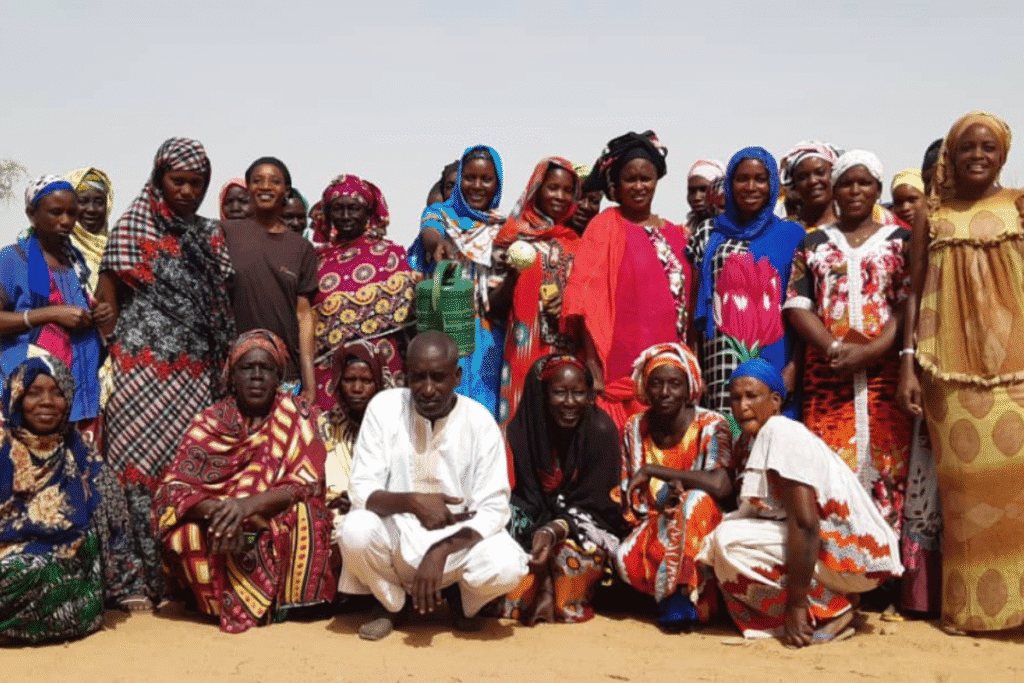
Overuse of salty bouillon cubes is commonplace in West Africa. For vulnerable families in Senegal, their health is not only impacted by inadequate calorie intake, but also by diets high in sodium. In the central Senegalese region of Linguère, World Renew—together with local partner Lutheran Services for Senegalese Development (SLDS)—runs a community development program that trains families in healthy nutrition practices, supports the establishment of vegetable gardens, and provides direct assistance to the most vulnerable community members, including orphans and people living with HIV and AIDS.
Binta had the opportunity to join a women’s group through the program and shares:
“With this group I participated in the cooking class where we learned from SLDS how to cook vegetables like carrots, turnips, and beans without using [bouillon] cubes. With a group of women from my village I made onion sauce and seasoned it with salt and pepper. We noticed that the food tasted fresher and less dry than our usual meals.”
Binta recalls that when she first joined the group, many women were worried that their children were underweight and malnourished. They were encouraged not only to see their children enjoy the healthier recipes, but also to witness real improvements in their wellbeing.
“They loved the recipe as much as we did. Since then, the physical and emotional health of many of the village children has improved. They have become healthier and more active,” Binta explains. “They preferred this food to the medicine we gave them to treat their malnutrition. When the women went to the clinic to weigh their underweight children after the training, they were told they were healthy and of a good weight.”
Binta and the other women now share what they’ve learned throughout their community.
“We believe that cooking classes should continue. We share the recipe with the women of the village when we see that their children are not eating enough or are malnourished. When they do, they find that their children are doing well, and their weight is returning to normal,” says Binta. “The women, especially the young brides who have just settled in the village, are happy and want to take part in our activities. They learn to cook better meals and become friends with other women during our meetings.”
Binta and the other members of the women’s group are grateful for the opportunity to be part of the program.
“We believe that of all the lessons SLDS taught us, this was the most important for us and filled our hearts with the greatest joy because no parent wants to see their child suffer from malnutrition,” says Binta. “We are grateful to the SLDS team, World Renew, and the donors for the great results we are currently achieving through the culinary workshops. We pray that God blesses them and grants them good health and long life.”
A Holistic Approach to Community Health
Around the world, World Renew partners with communities to improve health by equipping families with knowledge, skills, and resources for lasting change. Through community-based initiatives, it promotes better nutrition, disease prevention, maternal and child health, clean water and sanitation, and access to essential care—empowering people to take an active role in their wellbeing. Stories like Binta’s show how, when families learn and support one another, healthier diets, stronger children, and more resilient communities can flourish.
