
By Jeff Adams, Vice-President, Board of Directors
An elder lay in the dirt, too weak to stand, while a young woman fed him tiny scraps from a wooden bowl. Although this was a scene from a short play, the actors were illustrating what actually happened in Uganda’s remote, sun‑parched Karamoja region in 2022–2023.
At that time, prolonged drought meant people in Karamoja could not grow enough food. When appeals for government support brought only partial relief, communities turned to aid organizations. World Renew responded, working with local and international partners to organize emergency food distributions.
One of the communities reached was Kokuwam, where this play was performed. In the story, the elder—revived by the arrival of food—rose to his feet and joined young people dancing in celebration. Yet behind the performance was a painful truth: across Karamoja, 964 people died of starvation in 2022, including some in Kokuwam.
Despite this tragedy, Kokuwam’s residents greeted visitors with joy when a small delegation from World Renew and its local partner, the Pentecostal Assemblies of God (PAG), came to visit. Under the shade of a tamarind tree, the community welcomed them with singing, dancing, and drama.
“Some of our people died of hunger,” a community spokesperson said. “Thank you for coming and bringing food. The rest of us would not have survived without it.”
That experience led to a deeper commitment to support long‑term resilience in Kokuwam and other villages, helping communities prepare for future droughts.
Supporting Mothers and their Families with Healthy Resources
World Renew partnered with PAG to launch the Kotido Child Survival Project—a maternal and child health initiative that also incorporates peace and justice, food security, and economic development. Together, these elements are improving the health of pregnant women and their children during the critical first 1,000 days of life—from conception to two years old.
In response, 450 households across 20 villages in Kotido district joined the project. With an average of seven people per household, about 3,150 individuals benefit directly, while many more are reached through shared knowledge within their communities.
Most participating households include expectant mothers. Families are establishing communal gardens, growing nutritious and drought‑resistant crops such as carrots, eggplant, cassava, traditional vegetables, and amaranth grain. Community volunteers are being trained to teach sustainable agricultural practices.
Improving Nutrition through Community Gardens
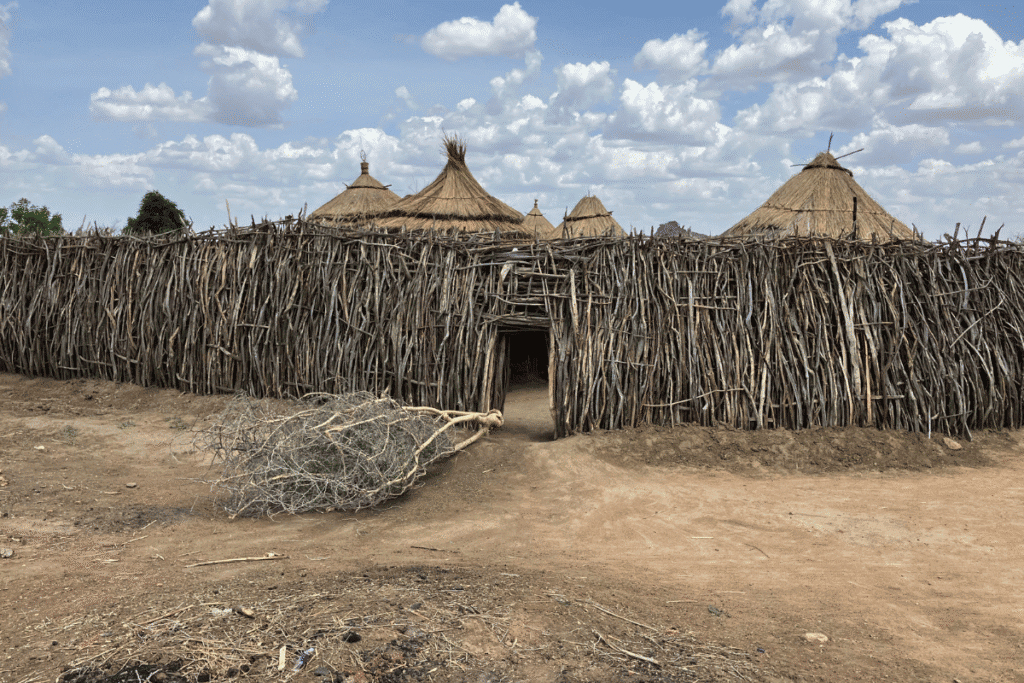
Agriculture has not traditionally been a primary livelihood in Karamoja. For generations, families depended on cattle and livestock. However, conflict and cattle raiding in recent years have forced communities to adapt. Even with protective stockades built around homes, livestock theft remains a serious threat, often leaving families without income.
Communal gardens offer a promising alternative. Access to nutritious vegetables improves health, particularly for mothers and young children, strengthening their resilience against future food shortages. Research shows that malnutrition in a child’s first two years can lead to long‑term effects such as stunting and delayed development.
Families can use the gardens to feed themselves and sell surplus produce for income. This added income helps cover essentials like food, medicine, and household needs, as well as transportation to medical clinics—ensuring women can access care during pregnancy and after childbirth.
Each household also receives moringa seedlings. Moringa trees grow quickly—maturing within 8–9 months—and provide multiple benefits. Their leaves support breastfeeding mothers, and their seeds can help purify water.
Preparing for a Healthy Future
The project also trains volunteer Village Health Teams, made up equally of men and women, along with Mother Care Groups. These groups promote healthy practices such as regular clinic visits, breastfeeding, childhood vaccinations, and protecting water sources from contamination.
“We want to empower women to take charge of their own health and their children’s health,” said Raymond Mutava, World Renew’s Uganda Country Director.
The initiative is also helping shift traditional gender roles. In many communities, women have carried the full burden of household work—cooking, cleaning, collecting water, and building protective structures.
During a visit, delegation members met young men preparing soil for planting in the intense 36‑degree heat—work traditionally done only by women.
“We used to see this as women’s work,” said one man, Michael. He reflected on how, during his wife’s earlier pregnancies, he neither encouraged nor accompanied her to health clinic visits. “My thoughts have changed,” he said.
Back at the community gathering, after the songs, dances, and prayers, 26‑year‑old Rosemary—nearing the birth of her third child—spoke to the visitors before a crowd of around 300 people.
“We really welcome you to our community,” she said. “You have brought us valuable lessons”—in farming, nutrition, maternal and child health, and gender equality.
With a smile, she added, “Our husbands used to just lie under the trees while we worked. Now they are helping us.”
A Commitment to Long-Term Resilience
As the gathering concluded, the sense of gratitude and determination remained clear. The celebration reflected not only what the community had endured, but what they are now building together through continued support. Through partnerships like this one, World Renew remains committed to walking alongside communities in places like Karamoja—supporting practical solutions that strengthen health, food security, and long-term resilience.
