
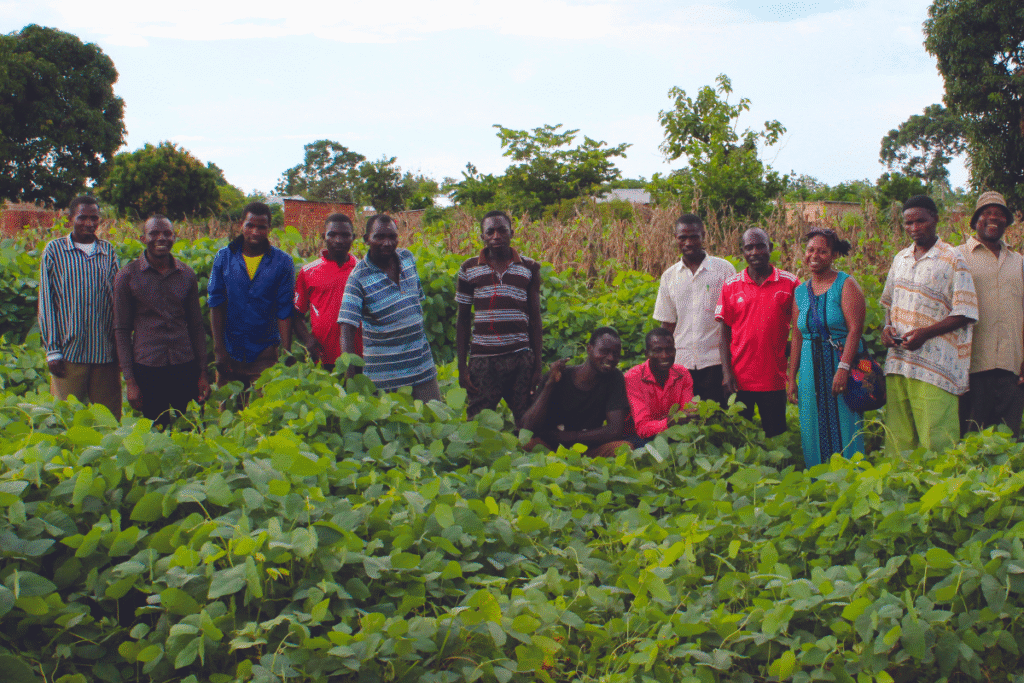
More than 65 percent of people in Tanzania rely on agriculture for their livelihoods, with an estimated eight million households—mostly in rural areas—engaged in farming. Yet across East Africa, changing weather patterns are making it increasingly difficult for traditional farming methods to produce the yields families need to survive and thrive.
Rajabu Kishosha, 43, is one of these farmers. A father of five, he once struggled to harvest enough to meet his family’s basic needs.
Learning from Local Champions
In 2018, Rajabu joined a conservation agriculture training program supported by World Renew. The program connects farmers who have successfully adopted conservation agriculture practices with others still using traditional approaches. These experienced farmers, known as Champion Farmers, share practical knowledge and encouragement based on their own results.
Rajabu visited Lucas Duba, a Champion Farmer who had harvested 15 bags of maize—100 kilograms each—from just one acre of land. In contrast, Rajabu had only produced 14 bags from 13 acres. Seeing what was possible inspired him to try a new way forward.
Small Changes, Strong Results
In 2020, Rajabu dedicated a quarter-acre of his land to conservation agriculture. He applied improved seeds, manure, cover crops, and proper spacing. That season, he harvested four bags of maize from that small plot alone.
Beyond the yield, Rajabu noticed important changes in his soil. The use of cover crops helped retain moisture, supported soil health by encouraging microorganisms, and reduced erosion—benefits that are critical in areas facing unpredictable rainfall.
Encouraged by these results, Rajabu expanded conservation agriculture practices to three acres in 2021. He continues to see meaningful improvements in his harvests and plans to extend these methods across more of his land in the years ahead.
Growing Hope for the Future
Rajabu’s story is one example of how practical training, peer learning, and sustainable farming practices can strengthen resilience for farming families. By improving soil health and increasing yields, conservation agriculture is helping communities adapt to a changing climate while building a more secure future.
Rajabu remains grateful for the support and knowledge he has gained, and he is committed to sharing these practices with others—ensuring the impact continues to grow from one farmer to another.
