
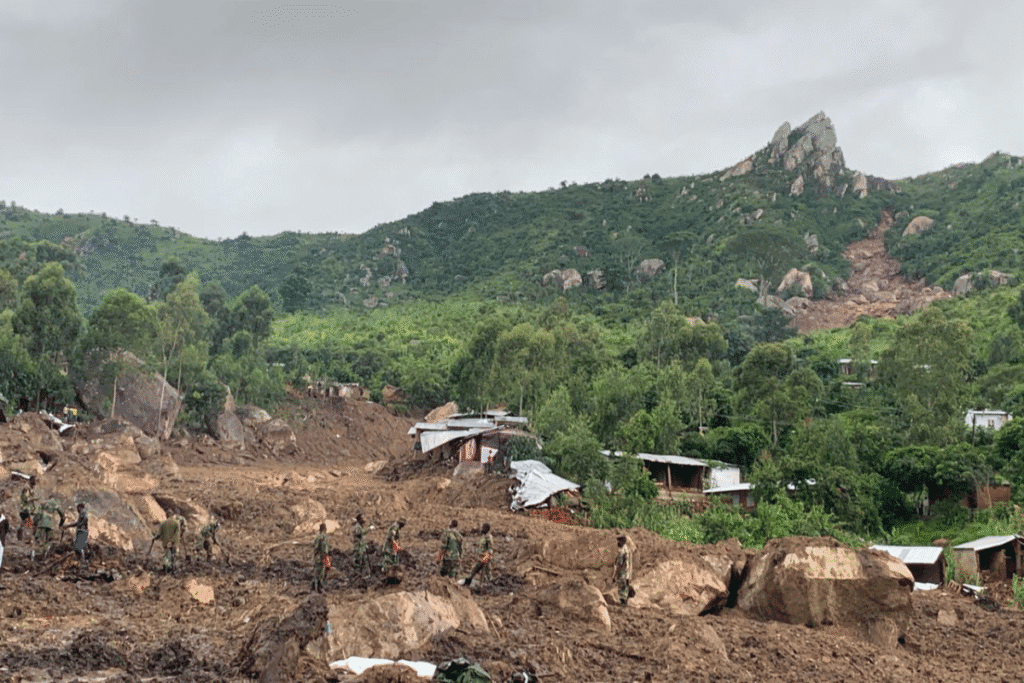
In early February, Cyclone Freddy formed off the coast of Australia and travelled roughly 8,000 kilometres across the Indian Ocean, making landfall twice in south‑east Africa. Bringing torrential rain and powerful winds, the storm triggered landslides and widespread flooding across Malawi, Mozambique, and Madagascar. At least 700 people lost their lives, and countless homes, crops, and livelihoods were destroyed.
Meteorologists have since identified Freddy as the longest‑lasting and farthest‑travelled tropical cyclone on record. Yet beyond the statistics, the storm’s legacy is measured in human loss. Thousands of families have been left heartbroken, facing displacement and hunger as they struggle to recover. Search and rescue efforts have continued in dangerous conditions, with responders sometimes digging through mud and debris by hand. As waters recede, concerns are growing about further loss of life due to disease—particularly in Malawi, the country hit hardest by the cyclone’s second landfall.
A Compounding Health Emergency in Malawi
Even before Cyclone Freddy swept through the region, Malawi was grappling with a severe cholera outbreak. Officials fear the flooding has intensified the risk of cholera and other water‑borne illnesses, with contaminated water sources and damaged sanitation systems. Nearly half of the country has reportedly been impacted by the storm, including hospitals and health‑care facilities.
Although hundreds of evacuation centres have been established, reaching displaced communities remains a significant challenge. Roads and bridges have been washed away, isolating rural areas and slowing the delivery of assistance to those most in need.
World Renew’s Response and Ongoing Concerns
World Renew has worked in Malawi since 1989. In the aftermath of Cyclone Freddy, staff and local partners have been focused on assessing urgent needs among displaced and vulnerable communities and determining how best to respond in a rapidly changing situation.
Jacqueline Koster, Interim Director of World Renew’s International Disaster Response team, explains:
“Our immediate priority is seeing that people have food, clean water, and shelter, but a lot of areas are inaccessible because of landslides and flooding and so this is slowing our progress. We ask for prayers for the people who have lost loved ones, their homes, their crops, and are depending on humanitarian aid to help them survive in the coming weeks. And, pray for the safety of those assessing the needs as they work to share Christ’s hope.”
The threat of further storms remains a concern. Southern Africa’s cyclone season typically extends through April, and additional weather systems could worsen conditions for communities still recovering. Koster also asks for prayer that “weather systems remain calm” as relief efforts continue.
Cyclone Freddy has also caused significant destruction in Mozambique and Madagascar. World Renew teams are working in both countries to assess the needs of affected communities and to identify appropriate ways to provide support as recovery efforts take shape. As disasters continue to occur more frequently around the world, gifts to World Renew’s International Disaster Response program help ensure that life‑saving assistance is ready when and where the next crisis strikes.
