
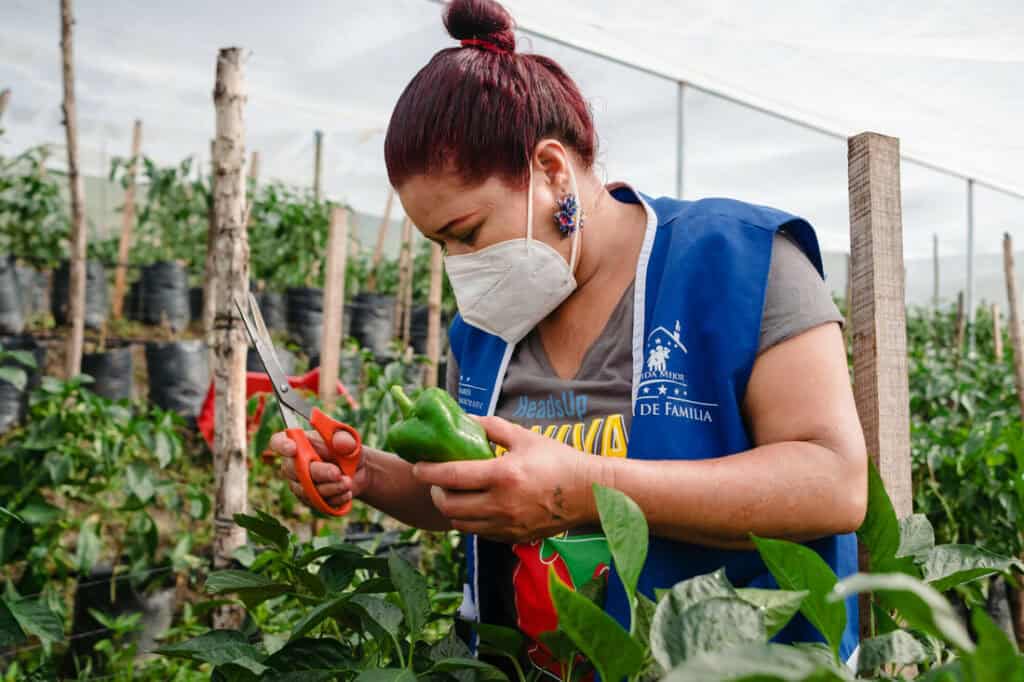
Community-supported agriculture (CSA) is a model that connects farmers directly with the communities they serve. It often involves shared investment, local distribution, and a focus on environmentally responsible farming practices.
While CSA models vary globally, the core idea remains the same:
local people supporting local farmers in ways that benefit the entire community.
5 Ways Community-Supported Agriculture Strengthens Community Development
Across diverse contexts—from rural villages to regions recovering from crisis—CSA can play a transformative role.
1. Improving the Income of Local Farmers
Sustainable community development requires more than short-term aid. Long-term progress comes through investing in local knowledge, skills, and resources.
CSA helps farmers:
- Earn more stable and predictable income
- Reduce reliance on volatile global markets
- Expand opportunities to sell locally and regionally
By strengthening local food systems, communities become less dependent on imports and more economically self-reliant.
At World Renew, this includes equipping farmers with climate-smart techniques and sustainable practices that increase both productivity and resilience over time.
2. Strengthening Social Connections and Community Cohesion
In many communities—especially those affected by conflict, displacement, or poverty—social connections can be fractured.
CSA helps rebuild these connections by:
- Encouraging collaboration through farmer groups and co-operatives
- Creating shared systems for food production and distribution
- Reconnecting people with their land, food, and one another
These relationships are foundational for long-term stability and trust, which are essential to sustainable development.
Complementary approaches like savings groups can further strengthen community resilience and financial stability.
3. Supporting Local Economic Development
Community-supported agriculture contributes to broader economic growth by creating opportunities at multiple levels.
CSA models can:
- Generate employment within farming and distribution
- Enable small-scale farmers to collectively process and market products
- Strengthen co-operative business models
For farmers who may not otherwise access larger markets, CSA provides a pathway to scale their impact sustainably.
Real-world examples from World Renew programmes show how co-operatives and shared enterprises can transform household incomes and long-term economic outlooks.
4. Promoting Environmental Sustainability
CSA is closely aligned with regenerative and sustainable agriculture practices that protect natural resources.
Farmers involved in CSA initiatives often adopt practices such as:
- Preserving soil health through sustainable land management
- Protecting biodiversity with natural pest control methods
- Conserving water through efficient irrigation and reduced pollution
- Reducing emissions by avoiding environmentally harmful techniques
These approaches help communities adapt to climate change while safeguarding ecosystems for future generations.
5. Building Resilience to Climate Change and Food Insecurity
Climate change and food insecurity are deeply interconnected challenges.
CSA strengthens resilience by:
- Diversifying crops and farming practices
- Strengthening local food supply chains
- Reducing dependence on external inputs and imports
As a result, communities are better equipped to withstand environmental shocks and maintain access to nutritious food.
How You Can Support Sustainable Farming Communities
Sustainable agriculture is not only possible—it is already making a measurable difference in communities around the world.
You can be part of that change:
- Learn and advocate: Explore World Renew webinars and communities of practice to better understand how agriculture, climate, and justice intersect
- Support sustainable development programs: Your gifts help train farmers and expand proven approaches across communities
- Engage locally: Contact us to explore ways to support local agriculture and sustainable food systems in your own context
Together, these actions contribute to stronger, more resilient communities globally.
