
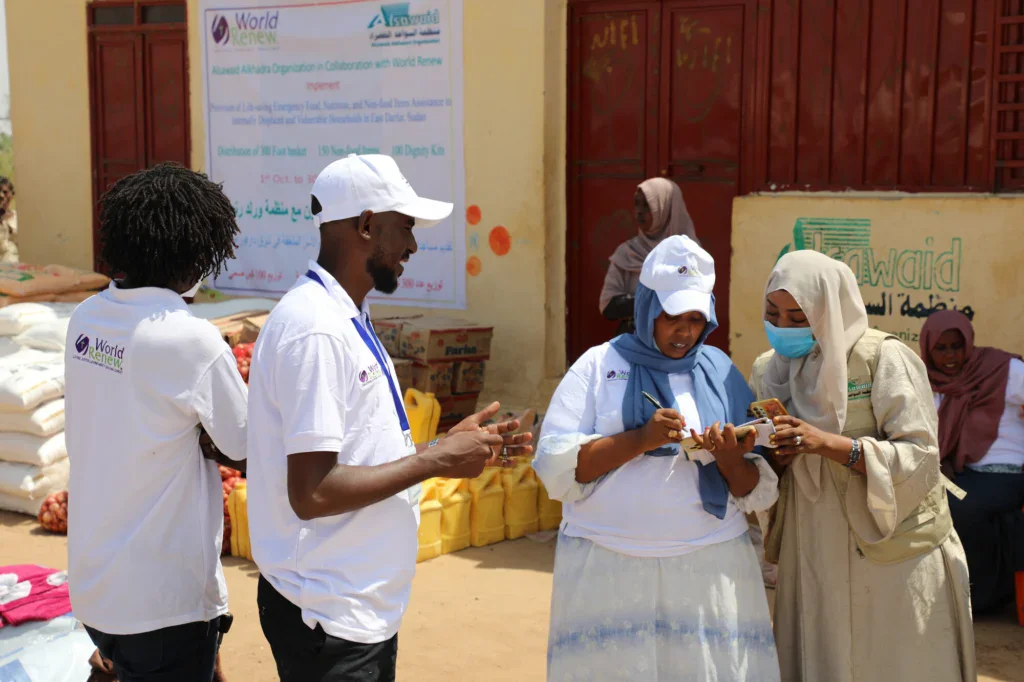
Preparing for disasters begins long before a crisis occurs. For World Renew, that means building strong local partnerships, planning ahead, and having resources ready to respond quickly when disaster strikes.
Most of us grew up hearing the same advice: save for a rainy day. We tuck away savings for unexpected expenses, knowing that emergencies rarely announce themselves in advance. But what does that principle look like when the emergency isn’t a broken furnace or car repair, but a flood that forces thousands of families from their homes?
According to Garry Mayhew, head of humanitarian and emergency affairs at World Renew, preparing for disasters begins long before the crisis starts.
“After over 60 years of working alongside communities affected by disasters around the world, we’ve learned a simple but important lesson: the effectiveness of a disaster response is often determined long before a disaster occurs,” Mayhew stated. “In other words, the best time to prepare for a disaster is before it happens.”
Acting quickly during a disaster
Across the world, disasters are becoming more frequent and more complex. Floods, droughts, storms, and human conflict can rapidly overwhelm communities, destroying homes, livelihoods, and critical infrastructure.
“In those moments, speed matters,” Mayhew said. “The difference between assistance arriving in days instead of weeks can significantly affect a family’s ability to recover.”
That reality was evident during recent flooding in Assam, India.
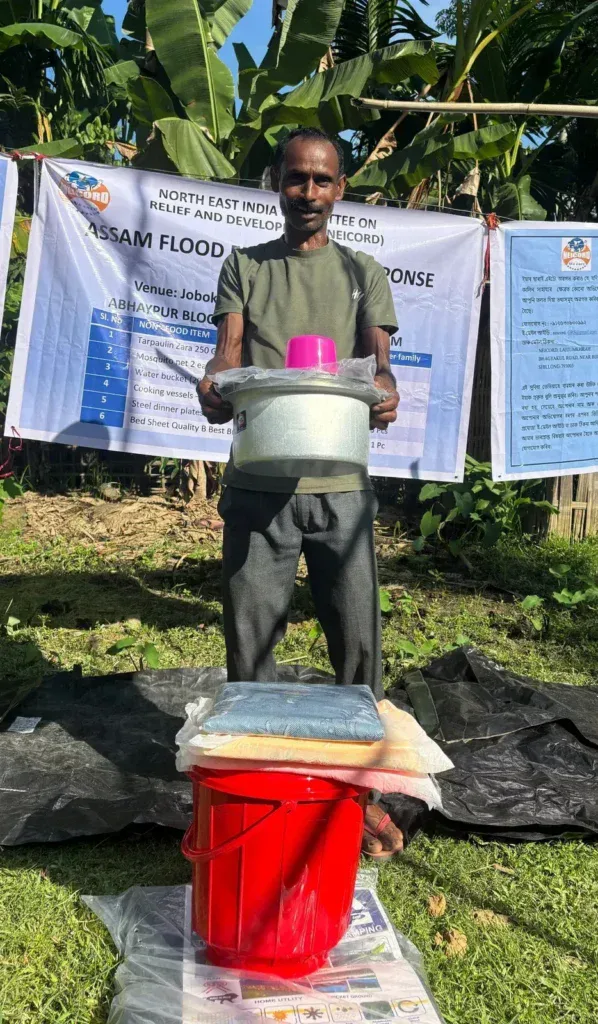
Heavy monsoon rains led to flooding that displaced families from their homes and affected more than 564,000 people. Through our local partner, NEICORD, World Renew was able to mobilize quickly and provide essential household items to 382 families in some of the hardest-hit communities. These essentials included tarpaulins, mosquito nets, cooking vessels, buckets, bed sheets, and other household supplies.
Supporting families after the flooding
For Lakhi, a 35-year-old mother of three, the floodwaters swept through her family’s mud-and-bamboo house in the middle of the night. “We lost almost everything we owned, including our household belongings, stored rice for the entire year, clothes, cooking utensils, and bedding,” Lakhi said. “Life was already difficult for us, but the recent flood made our situation even more desperate.”
The family spent days exposed to the elements with limited resources. When emergency assistance arrived, the support helped them regain a sense of normalcy.
For Philip, whose family had also been displaced by the flood, the emergency supplies his family received allowed them to set up a temporary shelter, prepare meals again, and create safer sleeping conditions for their children. “In this difficult time,” Philip shared, “[this] support has given us hope and helped us believe that little by little, we can rebuild our lives.”
The less visible work of preparing for disasters
Lakhi and Philip experienced the visible side of disaster response: emergency supplies arriving when they were needed most. Less visible are the preparations that made that response possible, including trusted partnerships, careful planning, and resources that were ready to be mobilized.
“One of the most important yet least visible components of preparing for disasters is access to flexible rapid response funding,” Mayhew said. “Having funds in place when local partners identify urgent needs means we can reach families quickly and reduce hardship.”
When “rainy day” funds are already in place, organizations can move swiftly, conduct assessments, procure supplies, coordinate with authorities, and reach vulnerable households while needs are still acute.
In Assam, this readiness made it possible for assistance to reach families fast, when the loss of a few more days could have made recovery even harder. More broadly, it reflects an approach to humanitarian response that World Renew has seen repeatedly through its work with local partners worldwide: communities recover more effectively when support arrives early, is locally led, and is shaped by actual needs on the ground.
Preparing for disasters is good stewardship
In the Bible, Joseph’s preparation during seven years of abundance enabled Egypt and its neighbouring countries to survive seven years of famine. His foresight was an act of stewardship, recognizing that preparation creates the opportunity to care for others when hardship comes.
In disaster response, stewardship means readiness. It means recognizing that preparing for disasters before the crisis occurs is one of the most effective ways to reduce suffering when it does.
“Communities facing disaster should not have to wait for help to be organized,” Mayhew said. “The strongest responses begin long before the emergency itself, when local partners, response plans, and flexible ‘rainy day’ funds are already in place and ready to act.”
Click here to learn more about World Renew’s international disaster response work.
