
In Sierra Leone, it is common to see small patches of unhusked rice laid out along the edges of roads or open ground. The rice is placed in the sun to dry—one step in a long and labour-intensive process that includes harvesting by hand, separating grain from stalk, partially drying it, and storing it in the husk.
When it is time to eat, the rice must again be spread out to dry before the husk can be removed through pounding and winnowing, leaving the grain ready to cook.
The challenge of drying rice safely
Women often stand over the drying rice to guard it from animals or people passing by. Yet even with this care, the grain remains vulnerable to dust, stones, and other contaminants carried by the wind.
Finding a safe place to dry rice is a persistent challenge for many farming communities. Ideally, what is needed is a grain drying floor—a smooth cement surface, enclosed with fencing and large enough for multiple families to dry their harvest at the same time. Such a space helps protect the rice, reduces food waste, and saves time and effort for those responsible for processing it.
A practical community-led solution
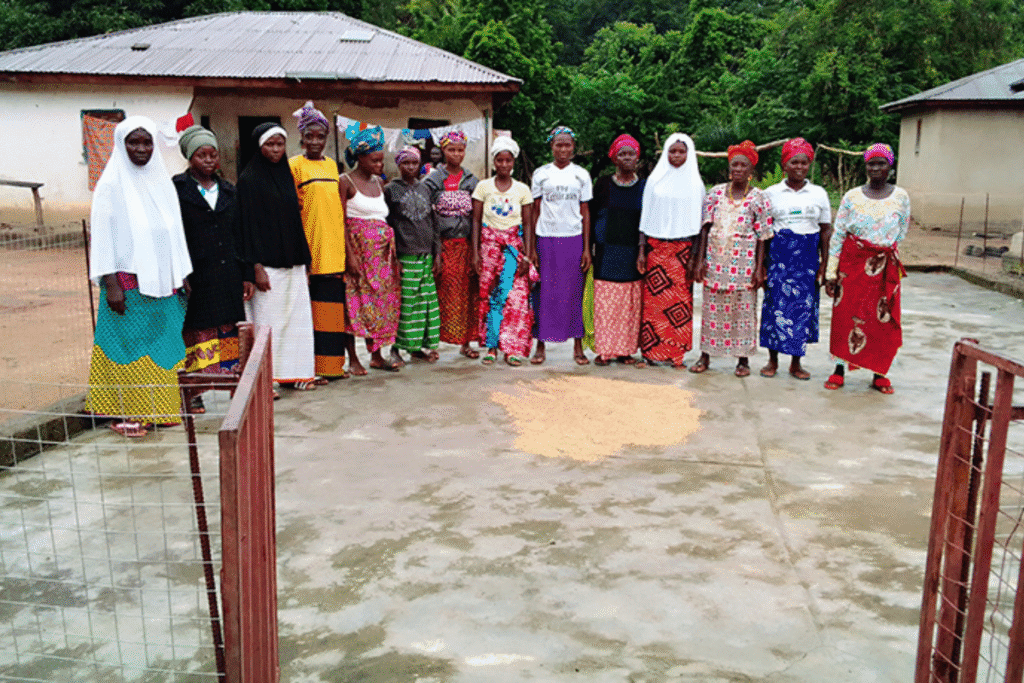
World Renew’s local partner, Christian Extension Services (CES), has been working with communities to support increased rice production and safer post-harvest handling. As part of this work, a grain drying floor was recently built in the community of Yoria.
Residents of Yoria contributed sand, water, stones, and local labour, while CES—with support from World Renew—provided the cement, skilled labour, and fencing materials. The result is a shared resource that benefits many families at once.
Borbeh Sesay, chairperson of the village agricultural committee, explains the impact: “The women used to dry our grains on cloth or on the ground where it usually mixed with stones and contaminants … with this new drying floor that isn’t the case … the rice is safe and secure.”
Small infrastructure, lasting impact
For communities like Yoria, simple infrastructure can make a meaningful difference. A safe place to dry grain helps protect harvests, reduces health risks, and lightens the daily workload—especially for women. These practical improvements support food security and strengthen local resilience, one harvest at a time.
