
The COVID‑19 pandemic posed a serious threat to the economic security of everyday families in Kenya. Travel restrictions and partial lockdowns disrupted key sectors of the economy, including agriculture, transport, tourism, and entertainment. The result was widespread job loss, rising food prices, and slowed local markets. These challenges were compounded by changing weather patterns and prolonged periods of drought, pushing many families deeper into food insecurity.
Through World Renew, Chrispinus Omoit, a father of seven, took part in a conservation agriculture initiative supported by Canadian Foodgrains Bank. At the heart of this work is a commitment to long‑term solutions to hunger. When communities face food insecurity, immediate relief matters—but so do practical approaches that help families sustainably provide for themselves over time. Conservation agriculture training equips farmers with tools and techniques to restore soil health, improve yields, and strengthen resilience in the face of economic and climate pressures.
Growing Resilience Through New Practices
Before joining the program, Chrispinus typically harvested two 90‑kilogram bags of grain each year. As he applied conservation agriculture practices season after season, he began to see steady improvements. By his fifth harvest, his production had grown to fourteen bags of grain—an incredible increase that transformed his family’s ability to access food and plan for the future.
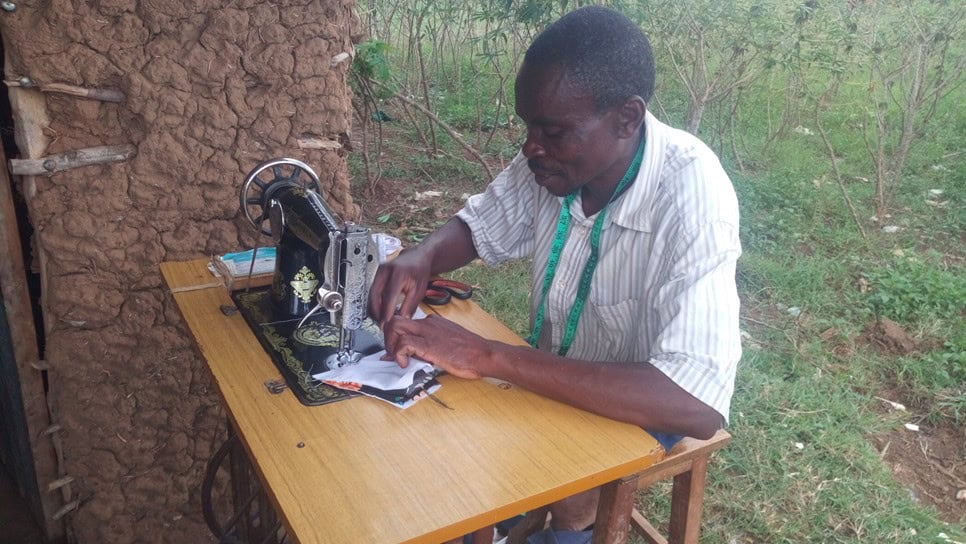
Encouraged by these results and confident in trying new approaches, Chrispinus also explored additional income‑generating opportunities. He invested approximately $130 USD in a sewing machine and fabric and began making reusable face masks in his spare time. Recognizing that many people in his community could not afford disposable masks, he sold his at a low cost and shared public health information with his neighbours. This small enterprise grew into a reliable source of income, earning him around $300 USD per month.
In addition, Chrispinus ventured into liquid soap making, generating another $80 USD in monthly income. These combined efforts provided financial stability during an uncertain time, allowing him to feed his family and continue paying his children’s school fees.
Beyond his own household, Chrispinus chose to share what he had learned. Other participants in the training program adopted mask‑making as a small business, creating new income streams for their families as well. His willingness to pass on opportunity reflects the deep, community‑level impact of equipping people with skills, knowledge, and hope.
Chrispinus’ story is a powerful example of how practical training, local initiative, and sustained support can work together to bring lasting change. It is one glimpse of how God’s transforming work takes root—planting not only crops, but resilience and possibility for the future.
