
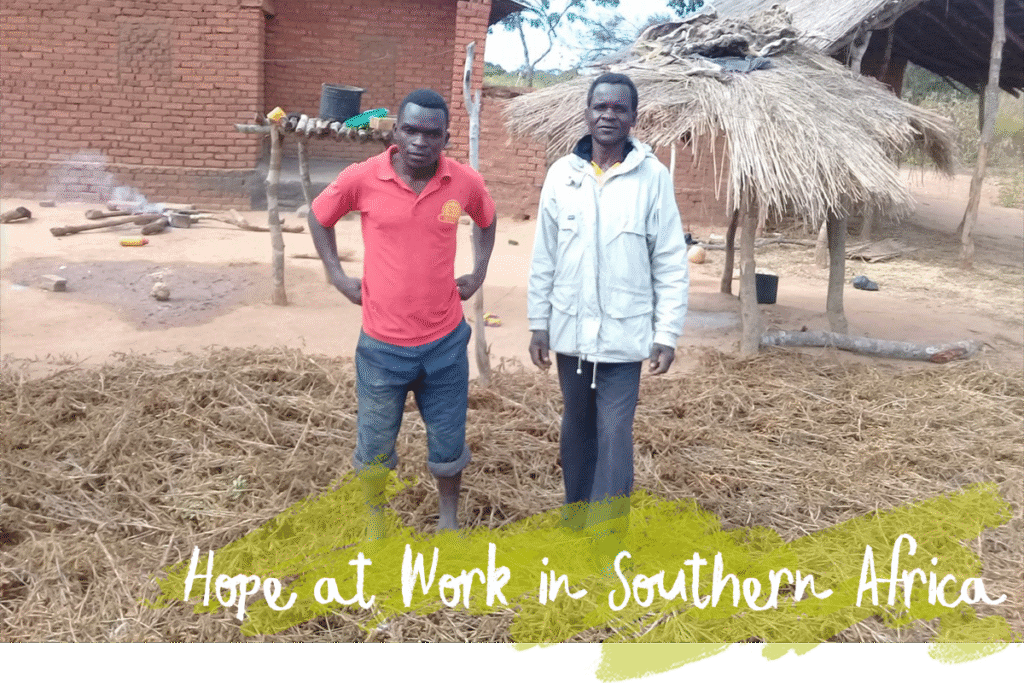
In an era of increasingly unpredictable weather, many farming communities around the world are being forced to adapt. In Zambia, traditional farming methods have become more difficult as rainfall patterns shift and growing seasons grow less reliable. Small-scale farmers like Flyted Zimba have felt these changes first-hand.
After years of declining harvests, Zimba decided in 2014 to take a new approach. He joined a Relief and Development program led by World Renew’s local partner, the Church of Central Africa Presbyterian (CCAP), which offered training in conservation agriculture—methods designed to improve soil health, retain moisture, and increase long-term productivity.
Growing More with Less
Since adopting conservation farming practices, Zimba has seen a remarkable change. He is now able to produce higher yields while cultivating less land. “Previously, I could harvest only up to 40 x 50kg bags of maize from a portion of four hectares under conventional farming,” he explains. “After conservation farming was ushered in our area, I have reduced the size of land dedicated to maize to one hectare, but I’m able to harvest more than 60 x 50kg bags of maize.”
The shift has also opened doors to new opportunities. By participating in a soybean grower project, Zimba diversified his crops and earned additional income of ZMK 3,600 (approximately $240 USD), strengthening his household’s financial stability.
Investing in the Future
Zimba chose to invest that income in his family’s future. He paid tuition fees for his second-born son, Abel, who has since graduated with a diploma from the Chipata Teachers Training College. Looking ahead, Zimba plans to continue working with CCAP to further develop his farm and improve his family’s quality of life.
“My future plans are to grow more certified soybean seed from CCAP, sell it, and use the resultant income to re-roof Abel’s house with iron sheets as well as build a storage shed for safe-keeping of my farm produce,” Zimba says.
Zimba’s story reflects a broader reality facing farmers worldwide: as the climate changes, resilient and sustainable farming practices can help families adapt, protect their livelihoods, and plan for the years ahead.
