
By Jon Self, Project Manager, International Disaster Response
The idiom goes: If you give a person a fish, they eat for a month. If you teach a person to fish, they eat for a lifetime.
But what happens when the river has dried up due to shifting weather patterns? Or the path to the river is blocked by a landslide? What if conflict makes it unsafe to leave your home—or an earthquake has destroyed the kitchen where meals are prepared?
In these situations, families often need temporary support to meet their most basic needs before they can return to their livelihoods.
In humanitarian crises, food quickly rises to the top of that list. Through partnerships with local organizations and through our membership with Canadian Foodgrains Bank (CFGB), World Renew supports families around the world to access the food they need. In Lebanon, I met a refugee family who had enough to eat that month because of this support. With food on the table, the father had the energy to take on work in nearby fields when it was available, earning a small income for his family.
What stood out was not a loss of hope or dignity. Instead, I saw love, gratitude, generosity, and creativity. Despite incredibly difficult circumstances, this family held onto hope for the future.
In these moments, World Renew is called to walk alongside people. While we cannot end conflict or prevent disasters, we can support families in meaningful ways as they navigate these challenges.
The Role of Choice in Ending Hunger
A core principle of humanitarian assistance is dignity—and a key part of dignity is choice: the ability to make decisions about everyday life.
Yet in emergencies, choice is often one of the first things lost.
That’s why World Renew’s responses aim to place decision-making power back into the hands of affected communities.
When responding to food insecurity, one of the first questions we ask is: How can we support you to have enough food each day?
The answers shape the response.
In a remote area cut off by seasonal rains, families may request physical food distributions. In an urban setting, families might prefer cash so they can purchase food locally.
The goal remains the same—to ensure people have enough to eat—but the path to that goal varies depending on context. What matters most is preserving dignity through choice.
What Does “Cash” Look Like?
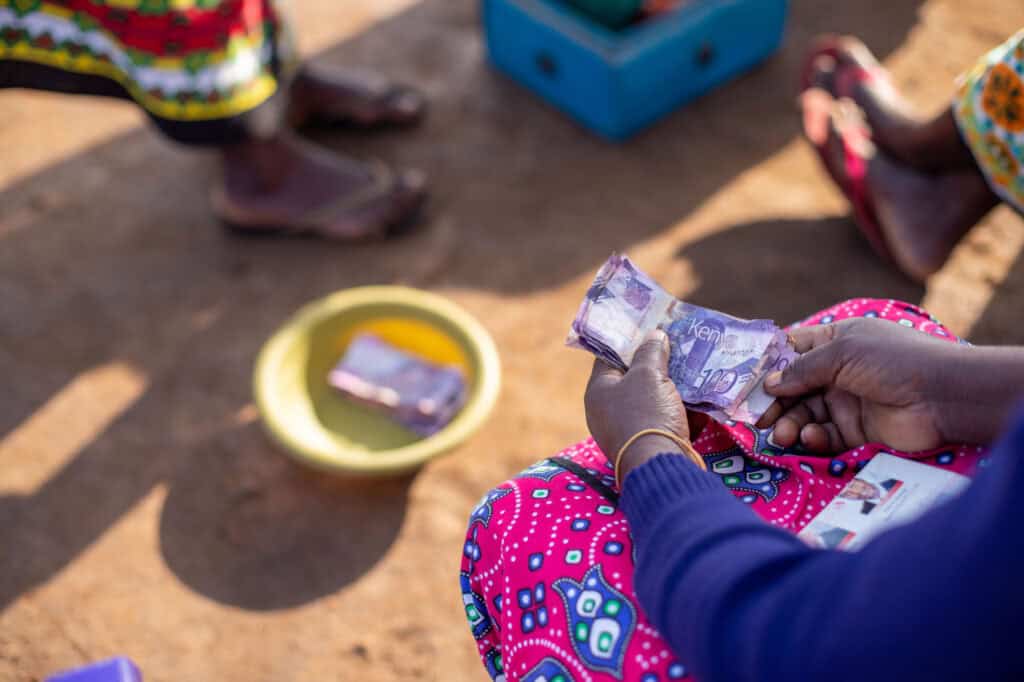
In humanitarian work, “cash” can take several forms:
- Physical cash distributions
- Mobile money transferred directly to a phone or bank account
- Paper vouchers with a cash value for local markets
- Prepaid cards that function like debit cards
Over the past decade, humanitarian organizations have learned more about the value of cash-based assistance. Once seen by some as a handout, cash is now widely recognized as an effective and flexible way for families to meet their needs.
It comes back to choice.
Cash allows families to decide what food to buy, where to shop, and how to prioritize their spending. In the midst of crisis and uncertainty, this flexibility can make a significant difference.
Two Ways Cash Strengthens Communities
Cash distributions do more than restore choice—they also contribute to stronger communities.
1. Supporting local economies
In Honduras, for example, families use cash assistance to purchase food from small, locally owned shops. This injects resources back into the community, helping local vendors continue operating and supporting broader economic stability.
2. Increasing efficiency in aid delivery
Providing in-kind food assistance requires transportation, storage, and logistics—all of which can be costly and time-consuming, especially in areas affected by disaster or conflict.
Cash transfers, particularly digital ones, can reduce these barriers. This means assistance can reach more people, including those in hard-to-access areas, more quickly.
The Future of Cash in Humanitarian Response
Cash is not always the right solution. In some contexts, markets may not be functioning, or families may prefer direct food assistance.
However, it is becoming an increasingly important tool in humanitarian response.
In recent years, World Renew has used various forms of cash assistance to help hundreds of thousands of people facing food insecurity across multiple countries. This approach has enabled more efficient responses, strengthened local economies, and—most importantly—restored a sense of choice and dignity for the people affected.
As humanitarian needs continue to grow and evolve, cash distributions will remain a critical way to support families—not just to survive, but to regain control over their daily lives. To learn more about how World Renew responds in times of crisis, including through cash assistance, visit our International Disaster Response page.
