
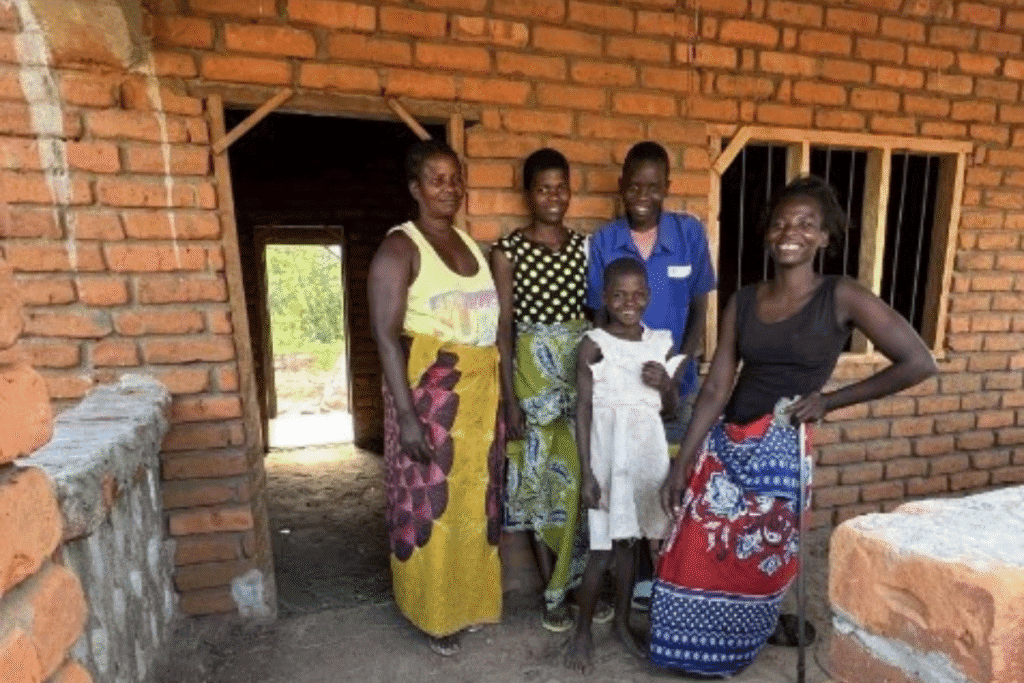
Alefa Pinto, 37, uses a cane to walk after a childhood illness caused damage to her joints. As the sole provider for her three children and her late sister’s son, she works with quiet determination to meet her family’s needs.
When disaster strikes
But when Cyclone Freddy swept across southern Malawi in March 2023—bringing torrential rain, fierce winds, and destructive floods and landslides—her resilience was tested.
“I was terrified when the floodwater rushed into my home. I heard a wall collapsing because the water also brought down large rocks and mud from the mountain,” she recalls.
The storm left widespread devastation, displacing hundreds of thousands of people and destroying homes, crops, and livelihoods. With funding from Canadian Foodgrains Bank, World Renew partnered with Word Alive Ministries to support families like Alefa’s with monthly cash assistance over several months, helping them purchase food and other essentials. Families also received seeds—maize, pigeon peas, beans, sweet potato vines, and vegetables—along with training in conservation agriculture to help rebuild their food security for the future.
“I am so thankful for the cash provided,” Alefa says. “It has allowed me to buy the necessary food for my family. I have saved enough funds to keep my children in school… I continue to save to purchase cement mortar to complete the rebuilding of my home.”
Recovery amid ongoing challenges
Yet recovery is rarely straightforward. Even after planting the seeds she received, Alefa faces new challenges. Southern Malawi has experienced drought during what should have been the rainy season, putting her crops—and her hopes for a full harvest—at risk.
“I am able to water a portion of my maize crop and vegetables by hand, using water from the community well, so I will still get some yield,” she explains. “I continue to pray for rain, and I have faith in God. He hears all prayers, so I remain hopeful.”
Hope that continues to grow
Alefa’s story reflects both the fragility and resilience of communities facing overlapping crises. Extreme weather, food shortages, and economic pressures continue to affect families across the region, making recovery an ongoing journey rather than a single moment of relief. Still, hope endures—in small harvests, in children returning to school, and in the steady rebuilding of homes and livelihoods.
As we reflect on Alefa’s perseverance, we are invited to hold in prayer all those navigating uncertainty: for provision where food is scarce, for strength where recovery feels long and uncertain, and for renewed rainfall and resources where they are needed most. Like Alefa, we trust that even in hardship, hope can take root and grow.
