
“Now to God who is able to do immeasurably more than all we ask or imagine, according to his power that is at work within us, to God be glory in the church and in Christ Jesus throughout all generations, for ever and ever! Amen.” — Ephesians 3:20–21
In regions of East Africa, as drought robs farmers of their crops and their ability to provide the basics for their families, finding a way forward becomes increasingly difficult. Although they knew it wasn’t a sustainable solution, for a time husband and wife Mayala Nyamonge and Chausiku Mayala relied on credit to buy food.
“What can you do?” Mayala says. “You need to eat.”
Through World Renew, the family joined a local Village Savings and Loan Association (VSLA). Along with other members, they set aside a small amount each week. No one had very much to contribute, but little by little the shared savings grew. Before long, members were able to take out low-interest loans.
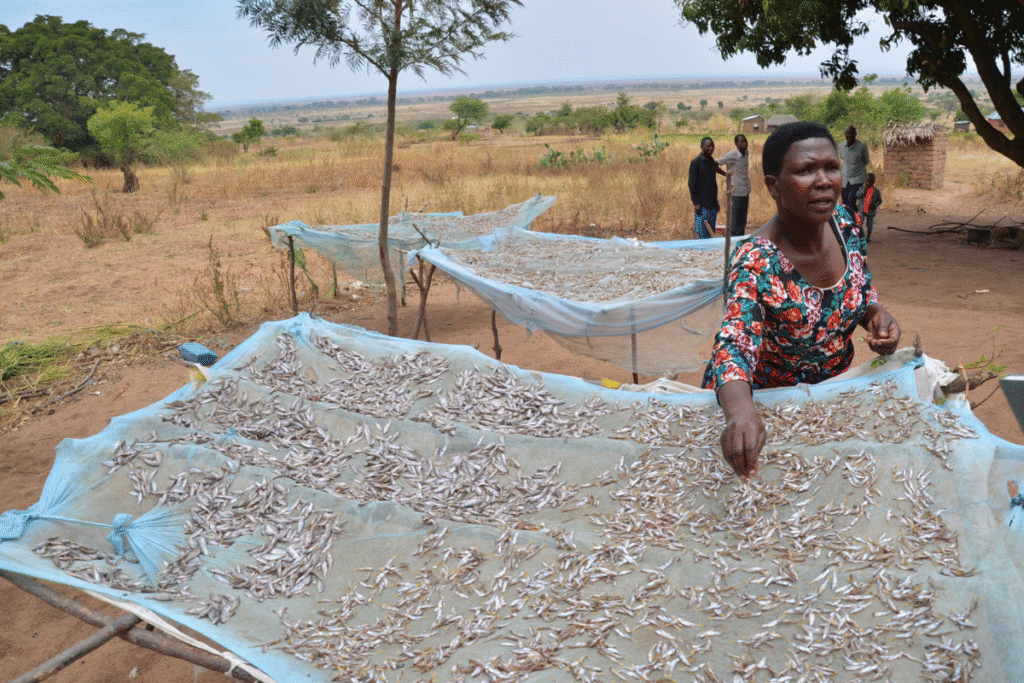
Mayala and Chausiku used part of their loan to buy shoes and pay school fees for their children. Chausiku also invested in a small sardine business. She purchases the fish, fries them, and sells them locally. This modest enterprise now helps ensure the family can meet their needs without relying on borrowed money.
Growing Food, Growing Hope
With World Renew’s support, the couple also began growing vegetables on a plot of land near their home. In dry conditions, a small kitchen garden is easier to maintain than a large field. Noticing that the more his garden produced, the less food he had to purchase, Mayala became determined to protect it.
Pests were a constant challenge, so he devised a creative solution: suspending the plant beds above the ground, making them harder to reach. The result has been a more reliable harvest and more nutritious, vegetable-rich meals for the family.
Greater food security has brought other changes as well. With less financial pressure, Mayala and Chausiku experience fewer marital tensions and are able to plan for the future with greater peace of mind. They imagine a day when their children are flourishing, food is always available, and credit is no longer a necessity. They are imagining more for their family.
As changing weather patterns continue to affect farmland around the world, many families face difficult questions about how to adapt. For countless small-scale farmers, giving up on farming altogether is not a realistic option. Instead, World Renew works alongside communities to explore ways farmers can adapt to a changing climate and continue to provide for their families.
Learning, Sharing, and Imagining Together
For Silas and Zena Samson, this adaptation has been life-changing. Four years ago, increasingly dry weather made it difficult for them to produce even one bag of maize, and that harvest was often damaged by pests.
Through training conducted by World Renew Tanzania, in collaboration with local government partners and the African Inland Church of Tanzania, Silas and Zena learned conservation agriculture techniques such as minimum tillage and using ground cover to retain soil moisture. They now grow a wider variety of crops to help maintain soil health and store their maize in hermetic bags to keep it pest-free.
Their land is producing more, but they have also gained something unexpected: time. The new farming techniques require less labour than traditional methods. Silas explains, “Now I have time to devote to being a church elder and leader, for taking more gender training, and more farm training.” Zena speaks with excitement about making bricks for their new home.
The Samsons are imagining more not only for their own family, but for their community as well. Farmers from neighbouring villages now visit them for advice, eager to learn from their experience. Silas and Zena give thanks for the knowledge they have gained and for the opportunity to encourage others to have faith in God’s love and abundance.
Hunger and food insecurity remain pressing challenges for families across the globe. Yet stories like these point to the power of local knowledge, resilience, and community support. Together, families are learning to adapt, to share, and to imagine more—trusting that with God, possibilities extend far beyond what we can see today.
