
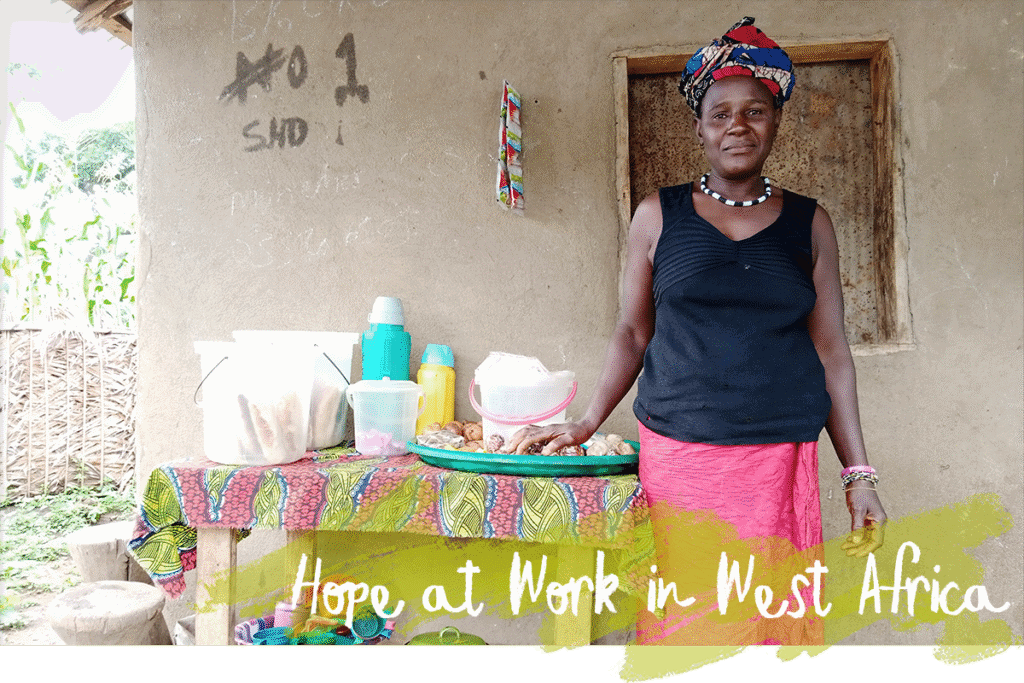
After losing her husband, Maria was left to care for her seven children with little help from relatives and no access to financial resources to invest in her home business or her farm. She explained:
“I had to take my eldest son out of school to help with the farm work which we needed to survive and to send the other children to school. Since there was no place to borrow money, we had to fetch firewood and burn charcoal to make money to have something to eat.”
With limited options and growing responsibilities, Maria faced difficult decisions simply to ensure her family could eat and remain in school.
A Community-Based Opportunity
When World Renew’s partner, Christian Extension Services (CES), began working in her village in northern Sierra Leone, Maria was selected by her community to be one of 30 participants in an agricultural and micro-loan program. Through this initiative, a community seed bank was established, providing participants with improved varieties of rice seed along with training in sustainable farming practices. Participants also gained access to small loans and a safe place to save surplus income.
“I’m sure the village knew I needed it more than everyone else,” Maria said with a smile.
With this opportunity, Maria began baking bread, breeding ducks, and expanding her charcoal production. Each step helped her strengthen her household income and reduce uncertainty around food and education.
Growing Stability and Hope
Reflecting on the impact, Maria shared:
“Without CES, we would still be having a food crisis and some of my children might not have been able to continue their education. I really thank God for CES and World Renew.”
Maria’s story is one example of how community-led programs, practical training, and access to modest financial tools can create lasting change. By investing in local knowledge and resilience, families are better equipped to face challenges and build a more secure future.
