
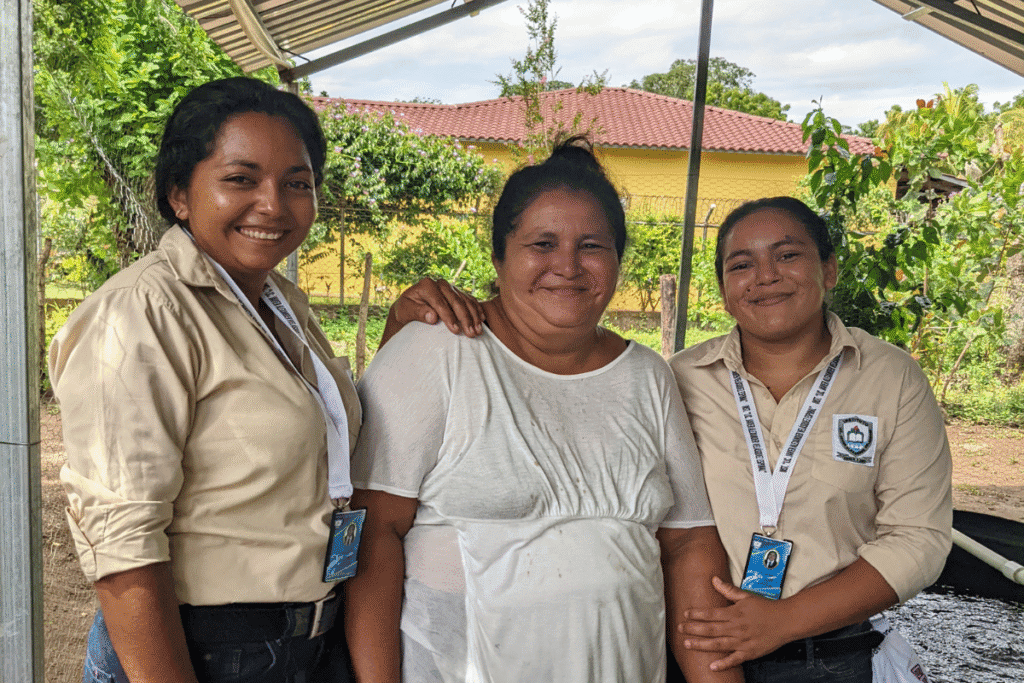
If you have been supporting World Renew for a few years, you may have read about Maira Guelpa at least once or twice. She has been participating in World Renew programming for three decades. World Renew works to equip communities with the training and resources to sustainably overcome hunger and is committed to walking alongside communities until they become self-reliant. Maira not only reflects that long-term commitment, but she also embodies the self-reliance we pray all participants in our programs will achieve.
Maira lives in Azacualpa, Honduras, in a region along the Central American Pacific coast often referred to as the Dry Corridor. The landscape tells the story of why the region has earned this name. Over the past two decades, extreme weather conditions have left the soil parched and vegetation withered.
In Honduras, 72 percent of families depend on agriculture for their livelihoods. As rainfall becomes less reliable, harvests decline—and many families face difficult choices. Some leave their loved ones behind in search of work elsewhere. “Many people stop in Azacualpa on their journey of migration from Honduras, but no one stays,” says Maira. Growing enough food to survive in drought-weary soil remains a constant challenge.
Growing Food—and Hope—Through Aquaponics
When World Renew’s local partner, Diaconia Nacional, first met Maira, she was pregnant and lacked the nutrition needed for a healthy pregnancy. Through a maternal and newborn nutrition program, she received vitamins and essential support, enabling her to carry her daughter, Marie Carmen, to full term.
Through this partnership, Maira was also introduced to aquaponics—a sustainable system that allows families to grow food year-round for both consumption and income. Aquaponics combines aquaculture (raising fish) with hydroponics (growing plants in water). Fish waste provides nutrients for the plants, while the plants help keep the water clean for the fish.
This system offers many advantages. It requires little land, uses about 90 percent less water than conventional farming, and does not rely on expensive fertilizers. Because water is recycled, it is rarely replaced. Plants also grow faster as they have continuous access to nutrient-rich water.
When aquaponics was first introduced in Maira’s community, many neighbours were sceptical. They doubted that food could be grown successfully in such small spaces with limited water. Today, Maira’s experience tells a different story.
“We have access to the infrastructure that allows us to have fresh and good quality vegetables all the time, because this is a system that does not require soil or fertilizer. We simply need water, fish, and plants,” Maira says with a smile. “It has come to improve our quality of life because now we have a balanced diet… We have meat from the fish that we’ve raised ourselves alongside vegetables: cucumbers, chili, avocado, cilantro, beans… well, many, many vegetables.”
A Life of Leadership and Faith
Maira, her daughter Marie Carmen, and her younger daughter—also named Maira—work diligently to maintain their aquaponics system. They also help introduce other families in their community to this approach. Over time, Maira has become a respected community leader.
“I tell everyone, it is not the same to serve as it is to be served. A good leader serves but does not wait to be served,” she says.
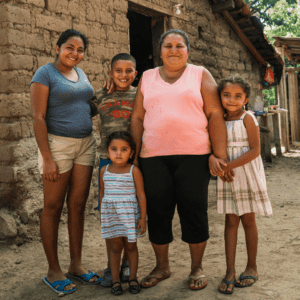 Her family continues to innovate. They have added a small water tank to breed fish, which they sell to other families starting their own systems. Maira has even begun producing her own fish feed using corn, soy, wheat, and oats. “We are learning day by day, we are being innovative,” she explains. “It turns out the same as the one I used to buy in the market.”
Maira gives God the credit for her resilience and creativity. She is also grateful for the faith community that has supported her journey. “I believe I have learned the way to have faith in God because I have surrounded myself with people who have not spoken to me about anything other than the compassion and love of Christ,” she shares. With a widening smile, she adds, “God only gives us his love.”
A Future Rooted in Hope
As Maira’s story shows, lasting change takes root when practical solutions are paired with hope, perseverance, and faith. Communities facing hunger and drought are not defined by their challenges, but by their strength and potential. Together, we can continue to support families as they build sustainable futures—where nourishment, dignity, and God’s love are experienced each day.
