
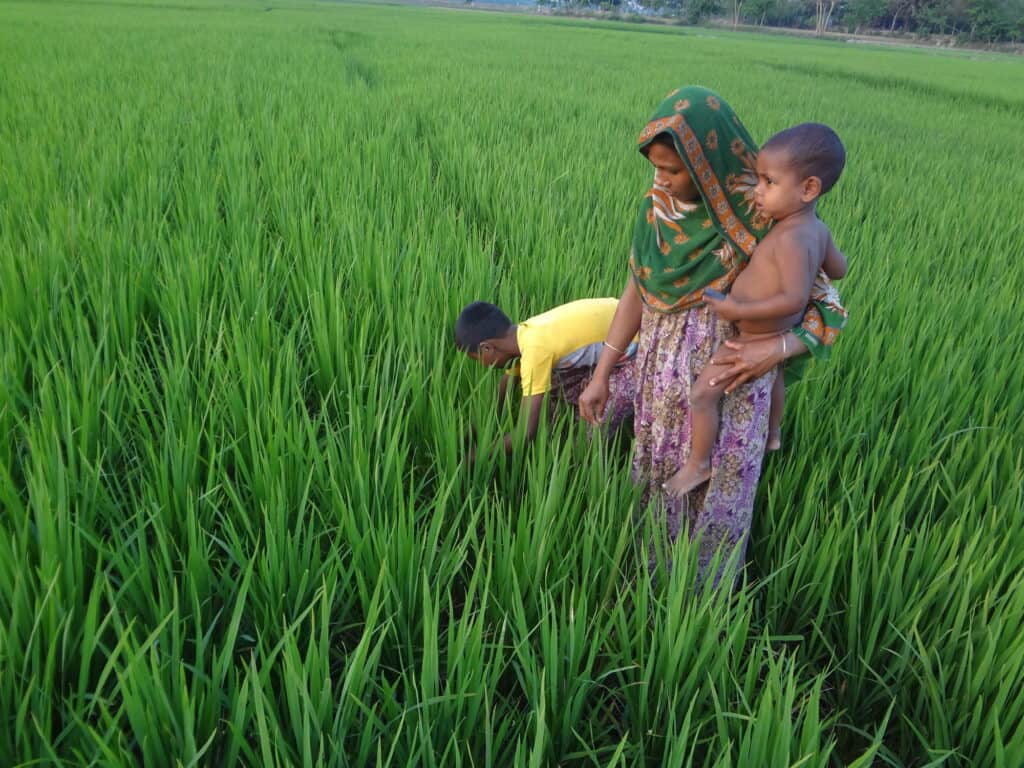
Three years ago, Popy Begum may not have guessed that ducks would change her life for the better.
Like many people in rural Bangladesh, Popy was struggling to make a living. She had no educational background and her days were busy with tasks around the home that she shared with her husband in the community of Kalmakanda. Her husband worked as a day labourer in other people’s fields.
In communities like this one, most household decisions about agriculture, nutrition, and other family matters are traditionally made by men. Even when women like Popy are diligently working hard to try and overcome food insecurity, they often have very few resources and choices available to them.
In 2017, World Renew, our local partner, and the Manitoba Council for International Cooperation (MCIC) together launched a sustainable agriculture and food security program in Popy’s community. Over the course of three years, this project trained 1,900 farming families that own less than half an acre of land in sustainable agriculture practices that helped them to increase their crop yields and diversify their diet with local nutritious food.
Through this project, farmers learned new ways of planting, weeding, and mulching their fields. They received good-quality seed and also began planting kitchen gardens as a means of increasing their crop. Farming groups were formed and supported by local community organizations called “People’s Institutions.”
In addition to improving food security in the community, this project also had a positive impact on gender equality. Men and women realized the benefits of making decisions together about their families and livelihoods–from types of seeds to plant, land plot sizes, how to spend their money, children’s education, and meals. Women started talking to their husbands about business matters and encouraged their partners to try new sustainable rice farming and fishing techniques. Some women also started working alongside their husbands to grow fruits and vegetables and raise animals.
For Popy, raising ducks on her small farm became a critical step in her family’s journey to better food and greater stability. She learned to raise ducks and was then able to help provide income for her family, as well as provide them with eggs to eat.
“I am very happy as I now have a regular income source,” she said.
Popy’s story is just one of many successes to celebrate as this three-year sustainable agriculture project in Bangladesh comes to an end and World Renew and local partners continue their work together.
Kohima Daring, World Renew’s country director in Bangladesh, is confident that the lessons learned through this project and other community development initiatives will continue to have a lasting positive impact from farmer to farmer, family to family, and community to community.
“This project really helped farmers to gain confidence and realize their potential. They were able to learn something new and then pass it onto their neighbours so that they all could benefit. This is truly sustainable,” Daring said. “Even though the project is finished, the work of the farmers and their dream to grow more and better crops will continue. And community partners and leaders will be with them step by step, encouraging them and helping them to get new opportunities.”
Stories like Popy’s show how practical training, local leadership, and shared learning can spark lasting change—not just for one family, but for entire communities.
