
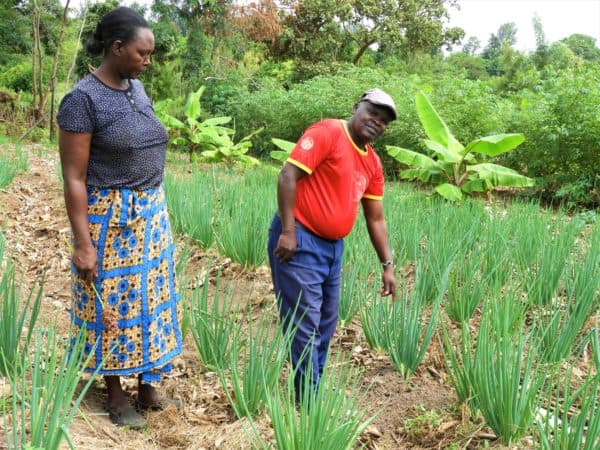
Lydia Wanjiru has learned not to put all her proverbial eggs in one basket. Through training in conservation agriculture with World Renew partner ADS Mount Kenya, the 50‑year‑old farmer saw significant gains after she began to diversify her crop production.
Crop diversification is the practice of cultivating more than one variety of crops belonging to the same or different species in a given area, often through planned rotations. By growing a variety of crops, smallholder farmers like Lydia and her husband, Francis Waweru, benefit from improved soil fertility, better pest and disease control, and more stable harvests season after season. Crop diversification, however, is just one element of conservation agriculture.
Conservation agriculture is a way of farming that emphasizes minimal soil disturbance, the use of permanent soil cover, and intentional crop rotations and associations to keep land productive over the long term. These practices also help farmers adapt to increasingly erratic and unpredictable weather patterns.
Before Lydia joined the ADS Mount Kenya program in 2016, she grew maize, beans, and fifty banana plants on sandy soil that received very little rainfall. Her crops were failing, and as a mother of six, Lydia felt frustrated by her inability to reliably provide for her family.
In 2018, following guidance from program staff, Lydia decided to diversify her crops by switching to drought‑tolerant cassava and sorghum. She also doubled her banana production to one hundred plants and began applying mulch made from organic matter to protect and nourish the soil.
Lydia’s efforts paid off. Her crops have continued to do well, even during seasons of limited rainfall. She has since diversified further by integrating higher‑value crops such as upland arrowroot, green leafy vegetables, and onions. She also expanded her kitchen garden by using an ultraviolet‑treated vertical garden bag and by creating additional vertical gardens from gunny sacks and containers.
Today, Lydia shares that by practicing conservation agriculture, she is able not only to feed her family a diverse and nutritious range of foods, but also to produce surplus crops that she can sell. This income has helped support her household, contribute to the building of a permanent home, and pay school fees for her children—an expense she once struggled to meet.
Lydia has diversified not only the crops she grows, but also how she earns income and nourishes her family. In addition to selling produce to neighbours and local traders, she dries cassava, arrowroot, bananas, and sorghum, mills them into flour, and sells the flour locally. She also uses it to prepare healthy, nutritious porridge for her family.
Today, Lydia encourages women in her local church and community to practice conservation agriculture. She shares not only the knowledge she has gained, but the tangible benefits she has experienced. Recently, she sold spring onions, bananas, and cassava and contributed the proceeds to a church project—extending the impact of her harvest beyond her own household.
