
In Turkana, Kenya, there has been a long history of young men raiding their neighbours’ cattle. The raiders, often referred to as warriors, were known to return from raids with thousands of cattle. Livestock played a central role in community life: cattle were used to pay dowries for wives and slaughtered during ceremonies. But raids frequently resulted not only in the loss of livestock, but also in the loss of human lives. Raided communities often sought revenge and attempted to recover stolen cattle, further fuelling cycles of violence.
For more than a century, the culture of the Turkana and neighbouring communities revolved around livestock keeping and cattle raiding. Over the past decade, however, that pattern has begun to change. Through collaborative efforts involving the Kenyan government and humanitarian organizations, initiatives focused on peace, security, and alternative livelihoods have helped reduce violence and restore dignity to human life in the region. These efforts have included disarmament initiatives, support for peaceful coexistence, and the introduction of new ways for families to earn a living. World Renew has been part of this work.
Choosing Farming Over Fighting
Since 2013, World Renew has implemented a range of projects in Turkana, particularly in Katilu Ward. These initiatives have included livelihood development, peacebuilding efforts, and drought response programming. Through Village Savings and Loan Associations (VSLAs), people with shared skills and interests come together to learn, save, and plan for the future.
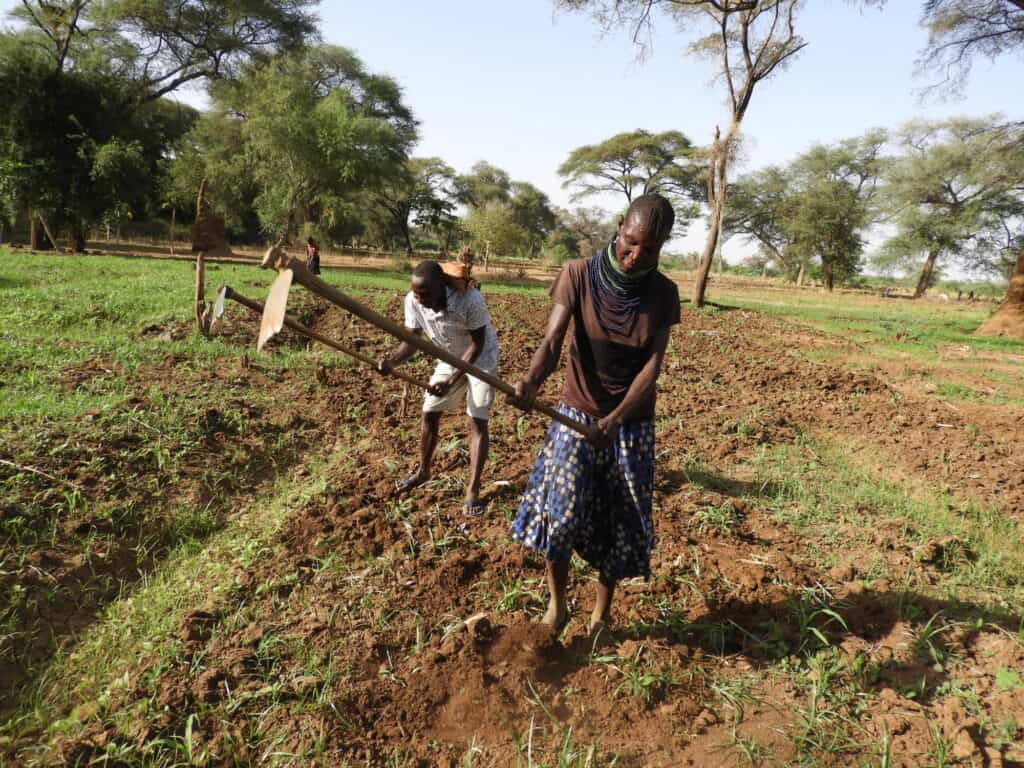
In Katilu Ward, the Nachacha Young Farmers Village Savings and Loans group includes more than 50 reformed warriors. Established over seven years ago, the group has learned new farming skills that have enabled members to earn a living through agriculture rather than cattle raiding. Together, they now farm more than 50 acres of land—on ground that was once a cattle‑raiding battleground. With training and support from World Renew, each farmer manages about one acre of land, growing crops to support their families.
The group produces a variety of grains and vegetables for local markets, including maize, millet, kales, spinach, green gram, cow peas, and more. Income earned through farming has made a tangible difference at home. Many members have been able to support their children’s education; more than ten have children in high school, and three have children attending university.
Resilience in the Face of Drought
In recent years, Turkana has faced consecutive failed rainy seasons that have placed intense pressure on households already living with limited resources. Alongside long‑term livelihood support, World Renew has responded to immediate food needs to help families weather periods of crisis while continuing to invest in sustainable futures.
Benson Nachodo, chairperson of the Nachacha VSL group, explains the significance of this shift:
“We are not going back to fighting with our neighbours! We have decided to use this land to make our living. We have manpower, and all we need is skills and someone to show us the way out of poverty. We are glad to work with World Renew who have shown us the way and walked with us in every step. They have taught us farming skills, VSLA and the need to come together to save, donated various seeds to us, and now because of the drought, are giving us relief food.”
The story of the Nachacha Young Farmers is one of transformation—of choosing peace over conflict, farming over fighting, and hope over despair. Through sustained partnership and community‑led solutions, former warriors in Turkana are building resilient livelihoods and a more peaceful future for the next generation.
